

Hands-on prompt engineering and LLM evaluation. Built around a diagnose-then-ship loop: forensic transcript critique ▎ that names the exact failure mode, paired with a fixer that produces complete, deployment-ready rewrites — not ▎ vague advice.

Elite AI Research and Verification Agent for deep research, evidence gathering, source validation, fact-checking, and structured intelligence synthesis. Use this skill proactively whenever the user wants to research a topic in depth, verify claims or statistics, fact-check a document or argument, investigate a subject thoroughly, gather evidence, validate sources, or produce a credible research report.

Paste two versions. The engine classifies every meaning shift, shows both quotes side by side, and ranks the changes by your document’s own stakes — catching the tiny word that quietly changed what must happen into what merely could.

Most people buy stocks on a vibe. They read a headline, like the product, glance at the P/E, and call it research. Then six months later they're wondering what went wrong. DeepDive is what a hedge fund analyst would do with your ticker. It tries to prove you wrong first, digs through the filings for what companies hope you skip, and hands you a real analysis. It also remembers your past picks, checks old theses against reality, and flags your own repeating mistakes.

Turn video scripts into structured retention audits — map hook failures, desertion windows, and re-engagement fixes using attention psychology.

Academic sanity-check with interactive HTML dashboard. Detects look-ahead bias, over-parameterization, and benchmarks against 10 canonical blueprints via animated SVG gauges and color-coded KPI cards. Parses natural language, code, or CSV uploads. Output auto-adapts (EN/ZH-TW/ZH-CN). Built on De Prado (2018). For students and strategy developers. Not financial advice.

Read and analyze images — extract text, describe content, identify objects, and interpret charts.

Your agent or chatbot keeps getting document content wrong, citing passages that don't exist, or saying "I can't find it" about things plainly in the docs. This reframes it as a retrieval failure, not a prompt bug: corpus profile, chunking, embedding and vector-DB index choice, retrieval strategy (top-k, hybrid BM25 + dense, rerank, query rewrite), context assembly with citations, and a golden Q&A set scored on recall@k / MRR / faithfulness.
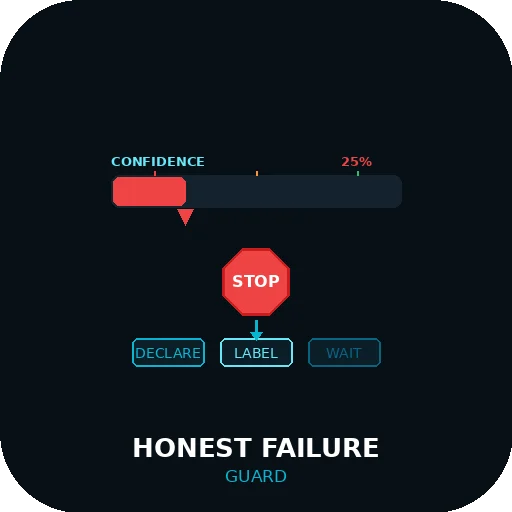
Gives AI agents a structured stop-and-declare protocol for four failure states — low confidence, collapsed premise, exhausted search, and incomplete evidence — so agents label what they don't know instead of fabricating what they can't verify.