

Should you raise the price, make the hire, or pivot? Paste the decision and get a finished verdict in minutes: go or no-go, the one risk that matters, what breaks in execution, and the single question that settles it. Built for founders and PMs who must decide today.
You get: a seven-slide decision outline with an evidence ledger, decision brief, option matrix, and action register. Verdict: rollout, follow-up, or hold is shown only against your supplied criteria, with [UNVERIFIED] gaps labelled separately — so you do not invent significance, causality, or outcomes.
Paste AI evaluation cases and get an evidence-bounded triage brief: expected vs. observed behavior, ranked hypotheses, and the missing checks to run next — so you can decide what to investigate first without claiming a root cause or fix.

Decide whether to buy, wait, or skip before you spend — with regret-risk scoring, future-self checks, and a 7-day purchase test.

Hands-on prompt engineering and LLM evaluation. Built around a diagnose-then-ship loop: forensic transcript critique ▎ that names the exact failure mode, paired with a fixer that produces complete, deployment-ready rewrites — not ▎ vague advice.

At McKinsey, a recommendation was only as good as the research under it. So I learned to do it right: scope the real question, pull from independent sources, triangulate what's actually true, and ground every claim in evidence. This Skill runs that discipline for you — breaking down a question, comparing sources, verifying claims, and writing a structured report with citations you can check. Decisions on evidence, not vibes.

Know if your backtest is a real edge or overfit noise. Runs bar-permutation MCPT, Deflated Sharpe, PBO/CSCV, Hansen SPA, Romano-Wolf StepM, a stationary bootstrap and an out-of-sample split on your own returns — no market feed, no API keys.
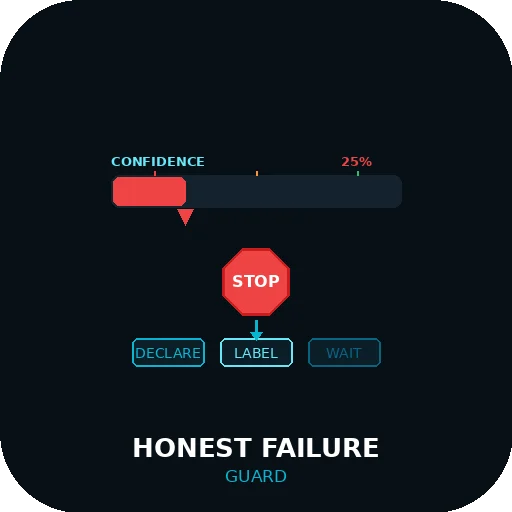
Gives AI agents a structured stop-and-declare protocol for four failure states — low confidence, collapsed premise, exhausted search, and incomplete evidence — so agents label what they don't know instead of fabricating what they can't verify.

Challenge your thinking before you commit. The riskiest decisions are the ones that feel obvious too early. Council runs your plan past independent advisers who surface objections and hidden risks — before you commit.