FirstPrinciplesEngineeringTruthsPurpose Inquiry
The Thinking Engine
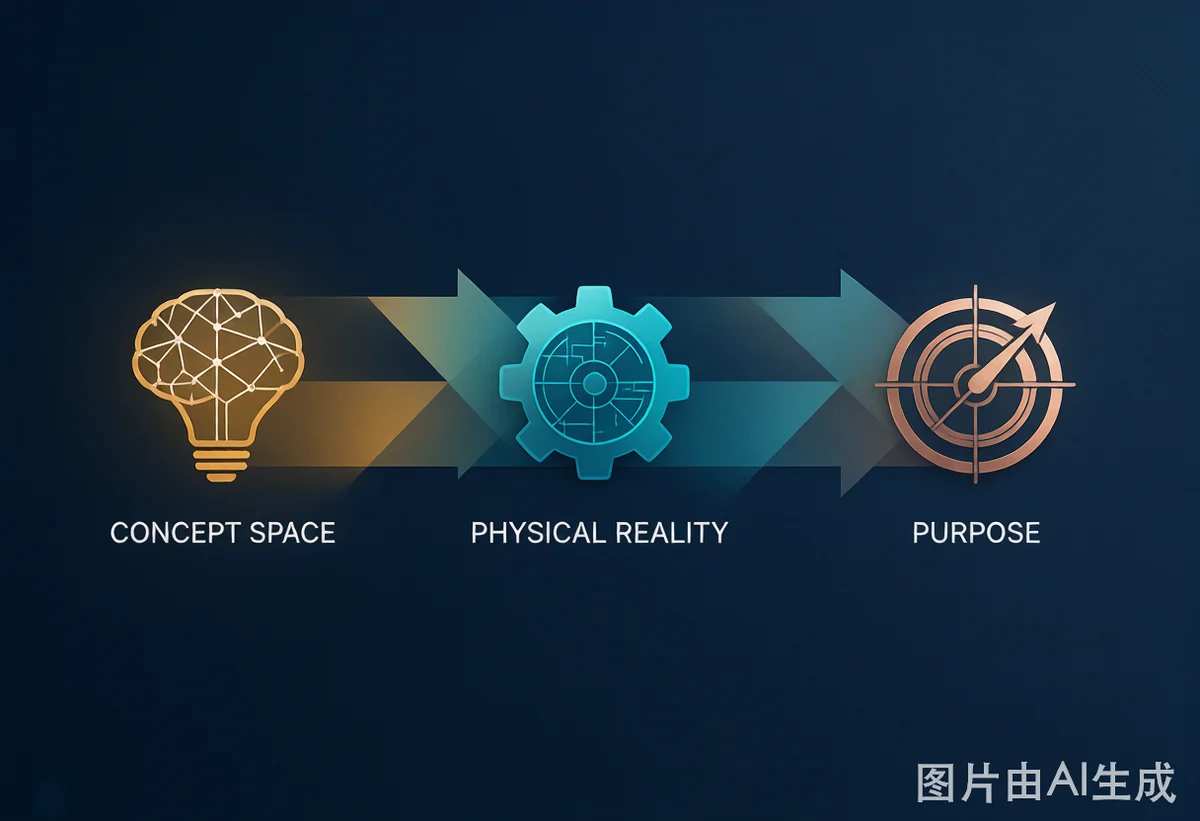
First Principles → Physical Reality → Ultimate Purpose
A cognitive operating system that makes AI agents think like founders, engineers, and philosophers — not just answer like chatbots.
 ## What It Does
This Agent is a stack of three deeply-distilled cognitive frameworks, designed to work together as one thinking pipeline:
| Stage | Framework | Core Question |
|---|---|---|
| 1 | First Principles Framework | What are we actually assuming? |
| 2 | Reductionist Engineering Thinking | What is the physical reality underneath? |
| 3 | Purpose Inquiry | What is this all for? |
When you ask the agent a question, it doesn't just respond — it walks through these three layers in order: break assumptions → decompose to facts → return to purpose.
Source-Traced, Not Hallucinated
Every mental model in this Agent cites its origin. 42+ original works distilled across 10+ philosophers and practitioners:
- Philosophers: Aristotle · Kant · Heidegger · Harari · Chen Jiaying · Wang Dongyue
- Practitioners: Musk · Bezos · Munger · Popper · Kuhn · Feynman · Thiel
Each model is cross-validated against incompatible schools of thought. Where there's consensus, we say so. Where there's irreconcilable disagreement, we show you both sides — instead of pretending one is correct.
Example Inputs and Outputs
Example 1 — Business Strategy
Input:
Should we add a recommendation algorithm to our e-commerce site?
Output (excerpt):
Stage 1 — First Principles:
Hidden assumption: "personalization = more sales." But is this a causal claim or a correlational one? What if "users who buy more also happen to like recommendations" (selection bias)?Stage 2 — Reductionist Engineering:
Decompose the cost: (a) ML pipeline infrastructure ~$2k/mo at 100k DAU; (b) engineering time to maintain — usually 0.5 FTE; (c) the real cost is data cold-start. For new users, you have nothing to recommend. This is a physics problem (entropy), not an engineering one.Stage 3 — Purpose Inquiry:
The Purpose Inquiry framework asks: what kind of customer do you want to create? If the recommendation system optimizes "time on site" but makes users feel manipulated, your optimization metric is killing your real goal — a customer who trusts you enough to come back. (Heidegger's "Gestell" — you turned your customer into a resource.)Recommendation: A/B test the minimum viable recommendation (e.g., "people who bought this also bought…") against no recommendation. Measure trust indicators, not just CTR.
Example 2 — Personal Decision
Input:
I'm a 32-year-old engineer considering an MBA. Should I do it?
Output (excerpt):
Stage 1 — First Principles:
Hidden assumption: "an MBA opens doors." For whom? Where? What doors? Specifically — what is the smallest test you could run to know whether the MBA you want actually produces the outcomes you want?Stage 2 — Reductionist Engineering:
Decompose the cost: (a) tuition + opportunity cost (2 years of foregone salary, ~$300k–500k depending on your current comp); (b) time; (c) the real cost — what skill atrophy occurs in 2 years away from code? Musk's principle: the cost isn't the price, it's what you stopped building.Stage 3 — Purpose Inquiry:
Aristotle's question: what is the good life for YOU? If the MBA serves "recognition" or "escape from current discomfort," it will fail. If it serves a specific, embodied purpose — "I want to start a company that needs this network" — it might work. Chen Jiaying: "the good life is walked, not designed." Stop trying to optimize the decision. Walk the path a little, see how it feels.
Example 3 — System Design
Input:
We're building a real-time chat feature. Should we use WebSockets or Server-Sent Events?
Output (excerpt):
Stage 1 — First Principles:
Hidden assumption: "we need real-time." What does real-time mean in your user's perception? <100ms? <2s? <10s? The constraint is perceptual, not technical.Stage 2 — Reductionist Engineering:
Physical reality: (a) WebSocket = bidirectional, persistent TCP connection, 1 connection per user, scales horizontally with sticky sessions; (b) SSE = server-to-client only, uses HTTP/2 multiplexing, no connection management overhead. The actual constraint is your reconnect logic under mobile network switches — that single bug will cost more engineering time than the protocol choice.Stage 3 — Purpose Inquiry:
Popper: what would prove this design wrong? If "real-time" is just marketing copy and 5-second latency is fine — don't build real-time at all.
When to Use This Agent
✅ Use it when:
- You have a decision that feels important and you can't articulate why
- You're about to copy a competitor's feature and want to know if their assumption is even valid
- A plan is falling apart and you're not sure which assumption is wrong
- You're building something in the AI era and want to keep your own thinking intact
❌ Don't use it for:
- Simple factual questions ("What's the capital of France?")
- Tasks where you want a confident, single answer without nuance
- Decisions that are purely emotional — frameworks won't help here
Sample Prompts to Try
1. "I'm thinking of raising prices by 30%. Run this through your framework."

2. "Our team is split on whether to use microservices or a monolith. Help me think about it."

3. "I keep procrastinating on writing. Use Purpose Inquiry to help me figure out why."

4. "Walk me through the decision to learn Rust as a Python developer."

5. "We just got Series A funding. Help me identify the hidden assumptions in our 'scaling' strategy."

How It's Different from Other AI Assistants
| Other AI Agents | This Agent |
|---|---|
| Generate confident answers | Surface hidden assumptions |
| Optimize for your stated goal | Question whether your goal is the right one |
| Recycle training data | Cite source philosophers and practitioners |
| Pretend to know | Acknowledge cross-school disagreements honestly |
| One-shot responses | Walk through three layers of reasoning explicitly |
Built-in Self-Limitation
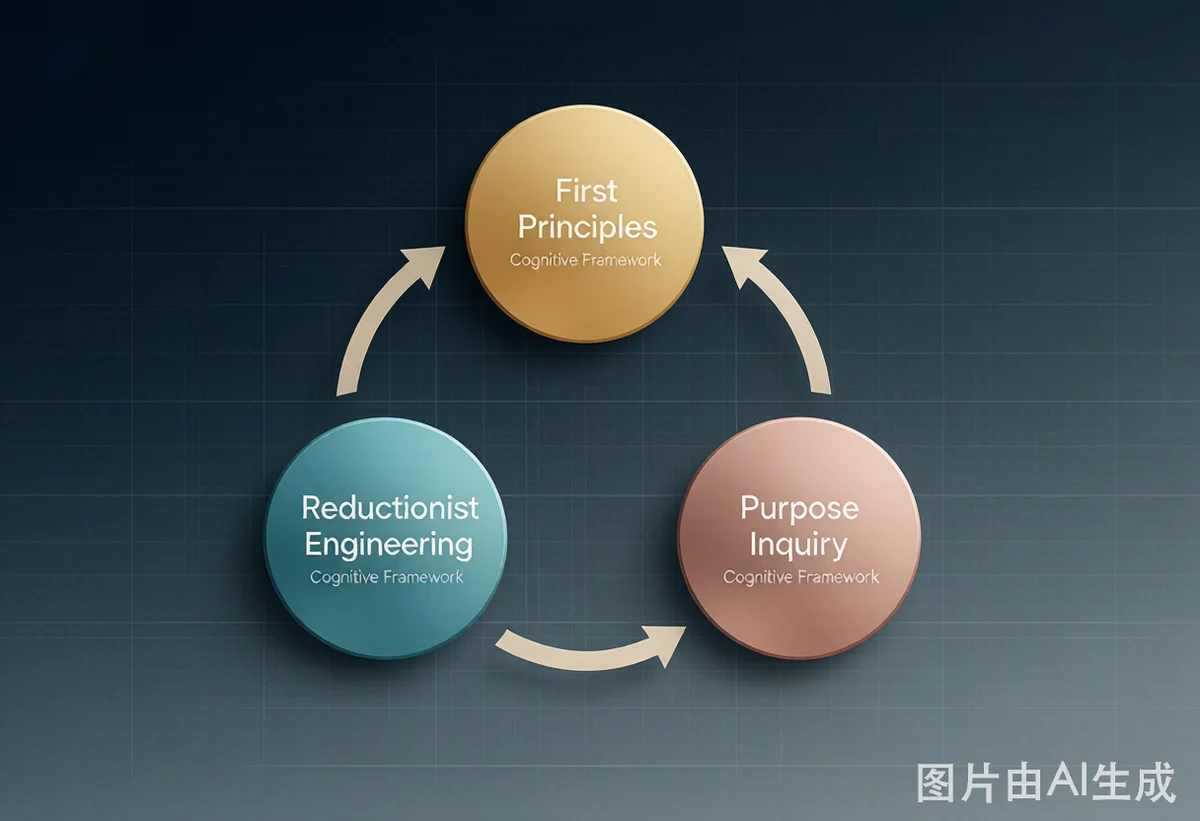
Every framework in this Agent ships with an anti-pattern checklist and an honest boundary statement. Examples:
- "Reductionist engineering works in physical domains. In social/cultural systems, holism may apply."
- "Purpose Inquiry asks better questions than it answers. If you want 'the right answer,' this isn't the agent for you."
- "Each framework can be misapplied. The Agent will flag when it detects itself being misused."
Honest Boundaries
This Agent won't:
- ❌ Give you a confident answer if your question deserves a contested one
- ❌ Optimize for your KPIs if your KPIs are the problem
- ❌ Pretend philosophy is engineering (or vice versa)
This Agent will:
- ✅ Show you which philosopher would say what about your decision
- ✅ Tell you when your question is the wrong question
- ✅ Force you to confront the trade-off you were trying to avoid
Update Log
- v1.0 (2026.07): Initial release. Three-skill cognitive OS.
About the Author
Built by Zhizhi Lab — an independent cognitive-tools studio. We don't ship AI-generated fluff. We distill deep frameworks from original sources and ship them as composable mental tools.