
Paste scattered incident notes, handoff messages, timeline, and impact details, and get a factual postmortem draft: a timestamped timeline, an evidence ledger, and a bounded causal read — so you can decide what happened, what is still unknown, and which follow-ups to assign first, without inventing a root cause.
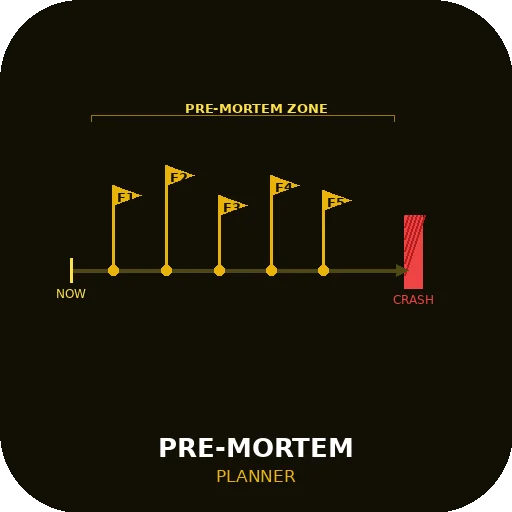
Forces AI agents to enumerate five specific failure scenarios before generating any output — at least one must be unique to the current task — then declare the single most likely failure and its mitigation, so every plan accounts for what could go wrong before committing to what might go right.

Your agent forgets the user across sessions or drops a preference one turn later, or you stuff the whole history into the context window until tokens explode. Reframe it as memory architecture: a memory-type inventory, a write strategy, storage and retrieval (vector / KV / structured DB, and the split with RAG), forgetting and updating, and memory tests, ending in a memory design doc.

Hands-on prompt engineering and LLM evaluation. Built around a diagnose-then-ship loop: forensic transcript critique ▎ that names the exact failure mode, paired with a fixer that produces complete, deployment-ready rewrites — not ▎ vague advice.

For a short you already posted. Send the video plus a screenshot of its retention graph (or your average % viewed) and get the curve redrawn with the drop-offs marked, the frame on screen at each drop, every leak ranked, a cut list with the new target length, and a verdict printed next to its threshold.

Get to the root of why loadbearing instructions fail You get the Drop Table, a plain-English root cause, a rebuild, and a scoreboard you keep

Paste incident notes. Get a time-stamped status update: observed impact, what is still unknown, and a clear judgment on what to say now versus what must wait for verification.

Save and resume AI-assisted coding and project work without repeating completed tasks. Capture evidence-linked progress, blockers, authorization boundaries and actionable next steps. Includes Markdown and JSON templates, plus an offline Python structure checker and Markdown renderer for compatible AI agents.