
ReplyGuard AI — Customer Support Response Studio
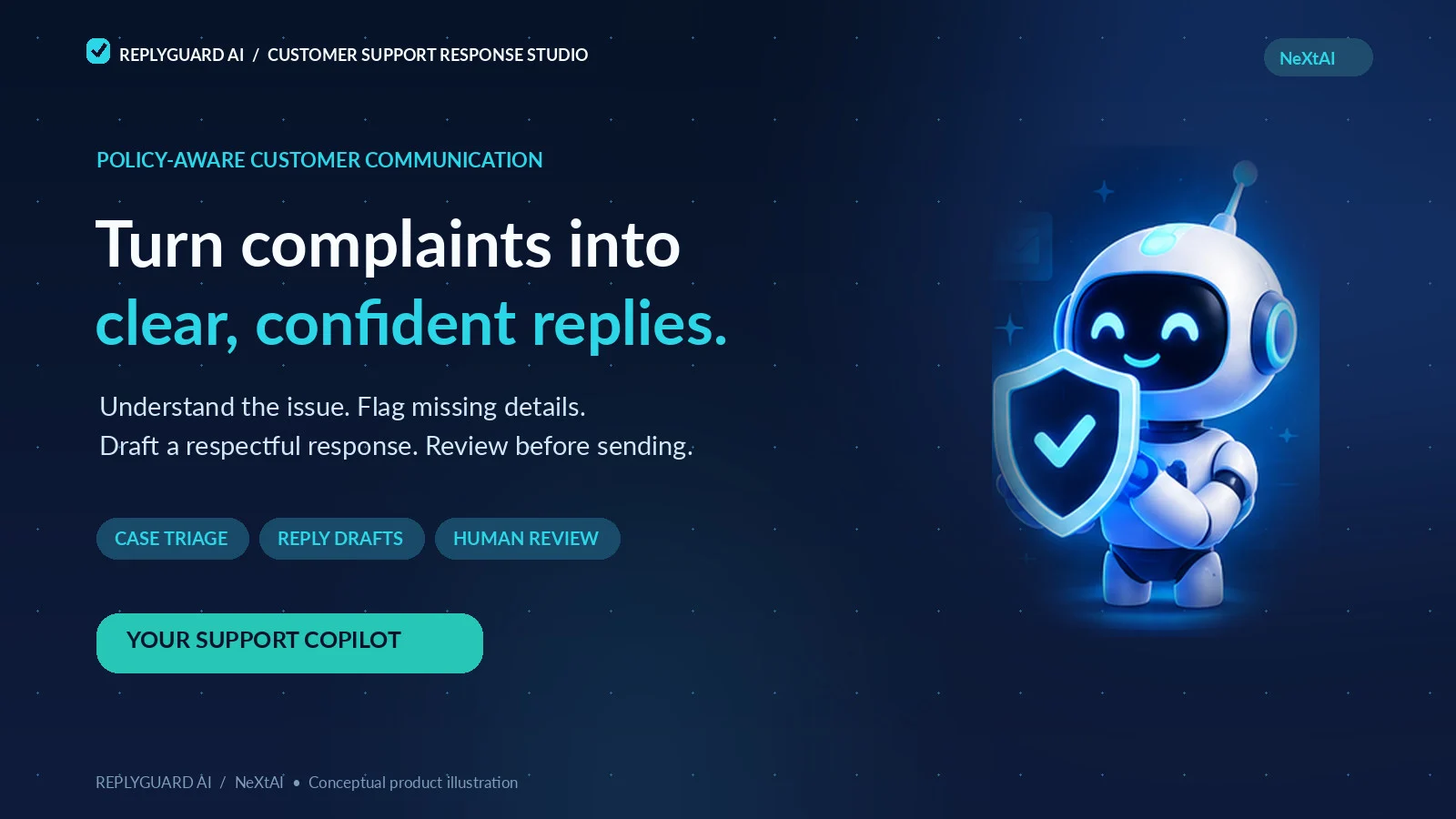 # 🛡️ ReplyGuard AI
Customer Support Response Studio
Better replies. Less guesswork. More control.
A customer is upset. An order arrived damaged. The support policy has conditions. Your team needs a response that is calm, helpful, and accurate — without making promises it cannot keep.
ReplyGuard AI helps turn messy customer messages into structured support cases and ready-to-review reply drafts. Paste a customer email, chat message, or complaint; optionally add your business's policy; then receive a clear case summary, a suggested priority, missing-information checks, a professional response draft, and notes for human review.
Your support team stays in control. ReplyGuard suggests and drafts. You verify and send.
💬 From a difficult complaint to a thoughtful next step
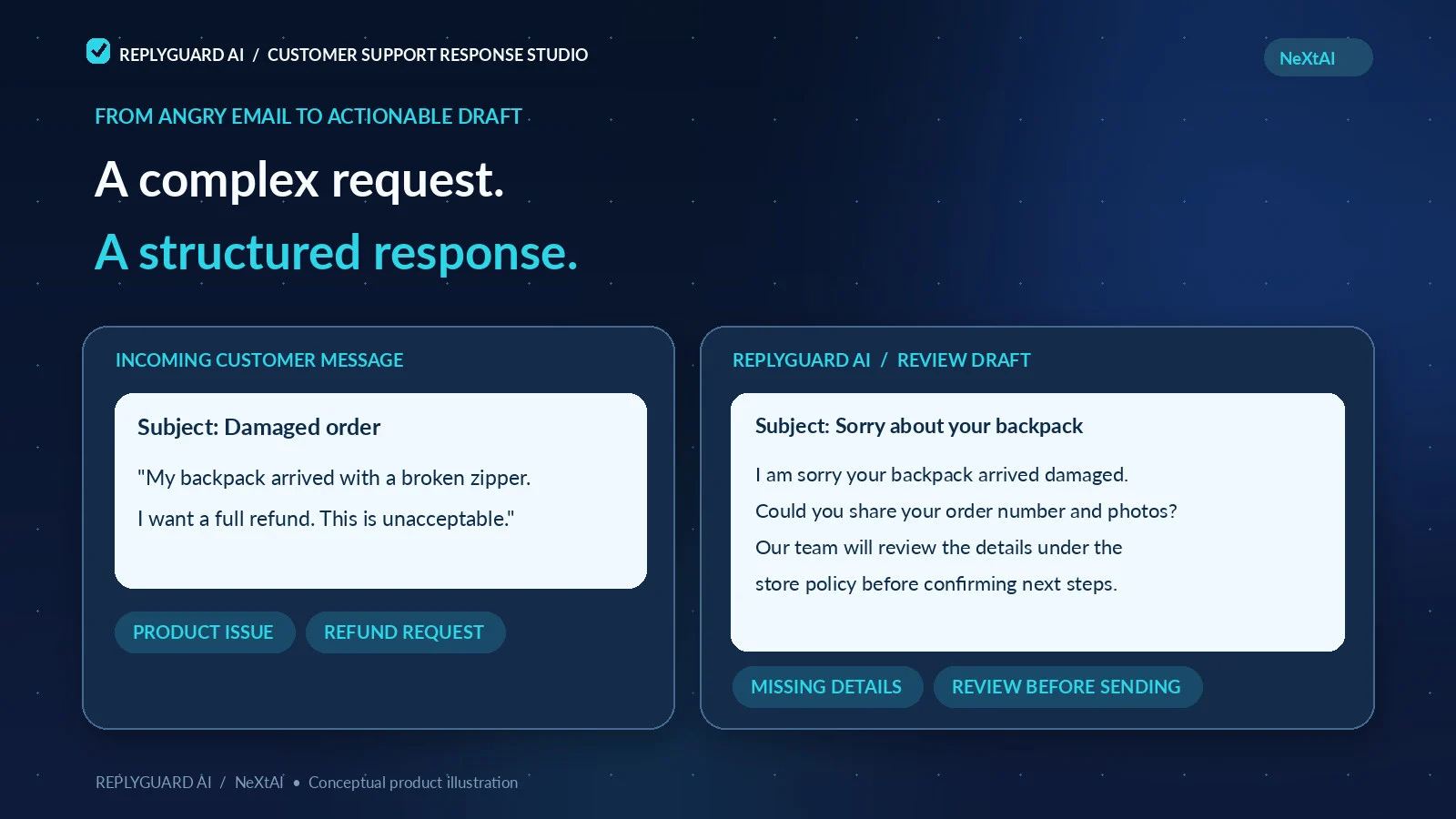
Customer message
“My backpack arrived with a broken zipper. I want a full refund now. This is unacceptable.”
Store policy provided by the operator
Damage claims require an order number and photos. Claims are reviewed within three business days. Refund decisions follow the review.
ReplyGuard helps your team:
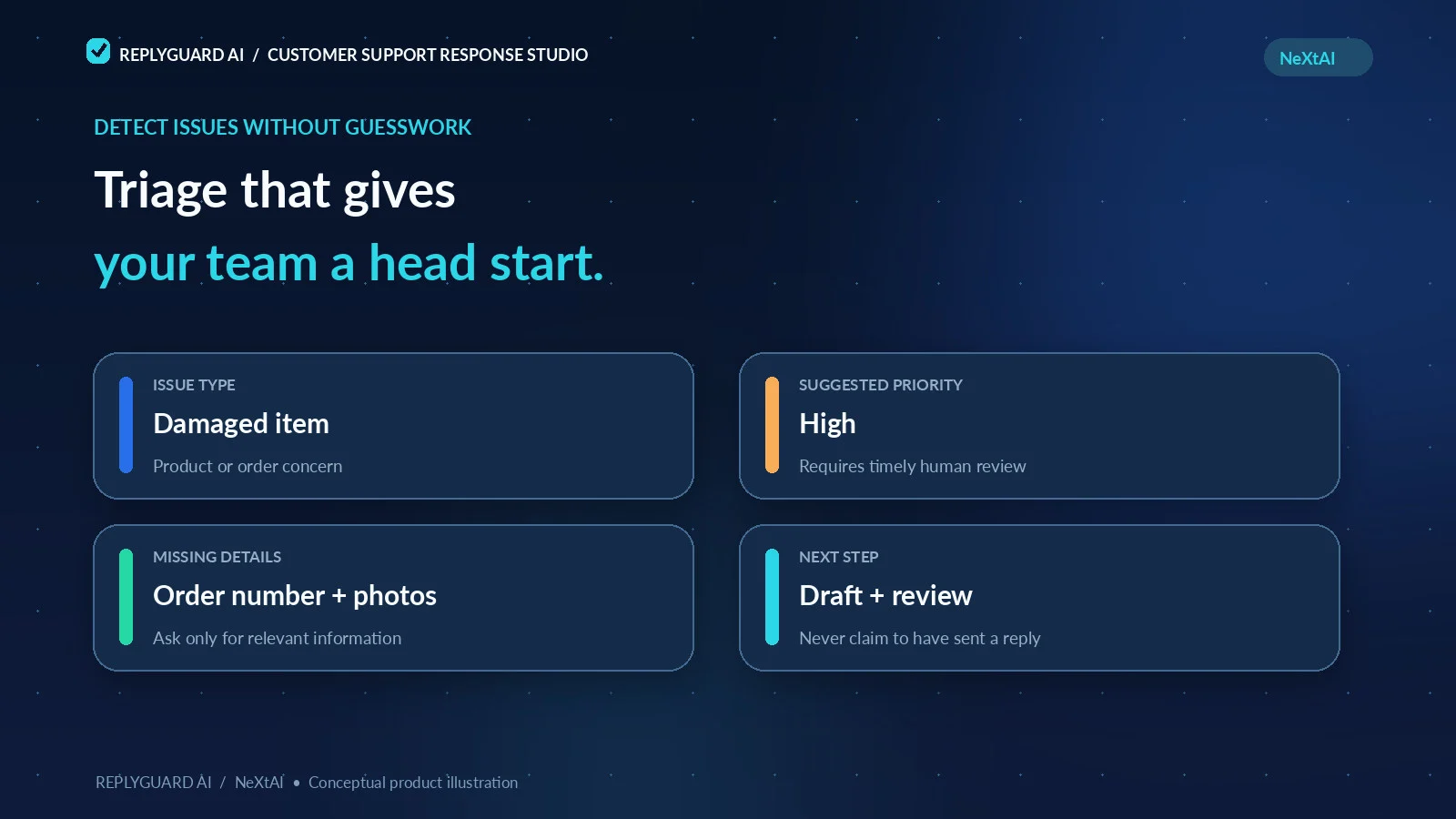
- Recognize the problem: possible damaged merchandise and a refund request.
- Suggest a priority: high-priority review, with an explanation rather than a claim of certainty.
- Identify what is missing: order number and supporting photos.
- Respect the supplied policy: explain the review process without guaranteeing a refund.
- Draft a customer-facing response: empathetic, concise, and practical.
- Prepare an internal handoff: make the next action clear to a human teammate.
Illustrative reply draft
Subject: We're sorry about your backpack
Hello,
I'm sorry that your backpack arrived with a broken zipper. I understand your frustration. To help our team review this properly, could you please share your order number and photos showing the damage? Under our support policy, damage claims are reviewed within three business days. Our team will assess the details and advise on the next steps.
Thank you for bringing this to our attention.
Best regards, Customer Support
This example uses a synthetic case and a fictional support policy. It is a proposed reply, not a sent message.
✨ Six useful capabilities
| Capability | Why it matters |
|---|---|
| 📨 Complaint triage | Organize the customer's issue into a readable case summary. |
| 🚦 Suggested priority | Highlight cases requiring quicker attention or escalation. |
| 🔎 Missing-detail detection | Know what to ask before committing to a solution. |
| ✍️ Reply drafting | Generate courteous customer-facing language suited to the situation. |
| 🛡️ Policy-aware guardrails | Use only policies supplied by the operator; flag unsupported claims. |
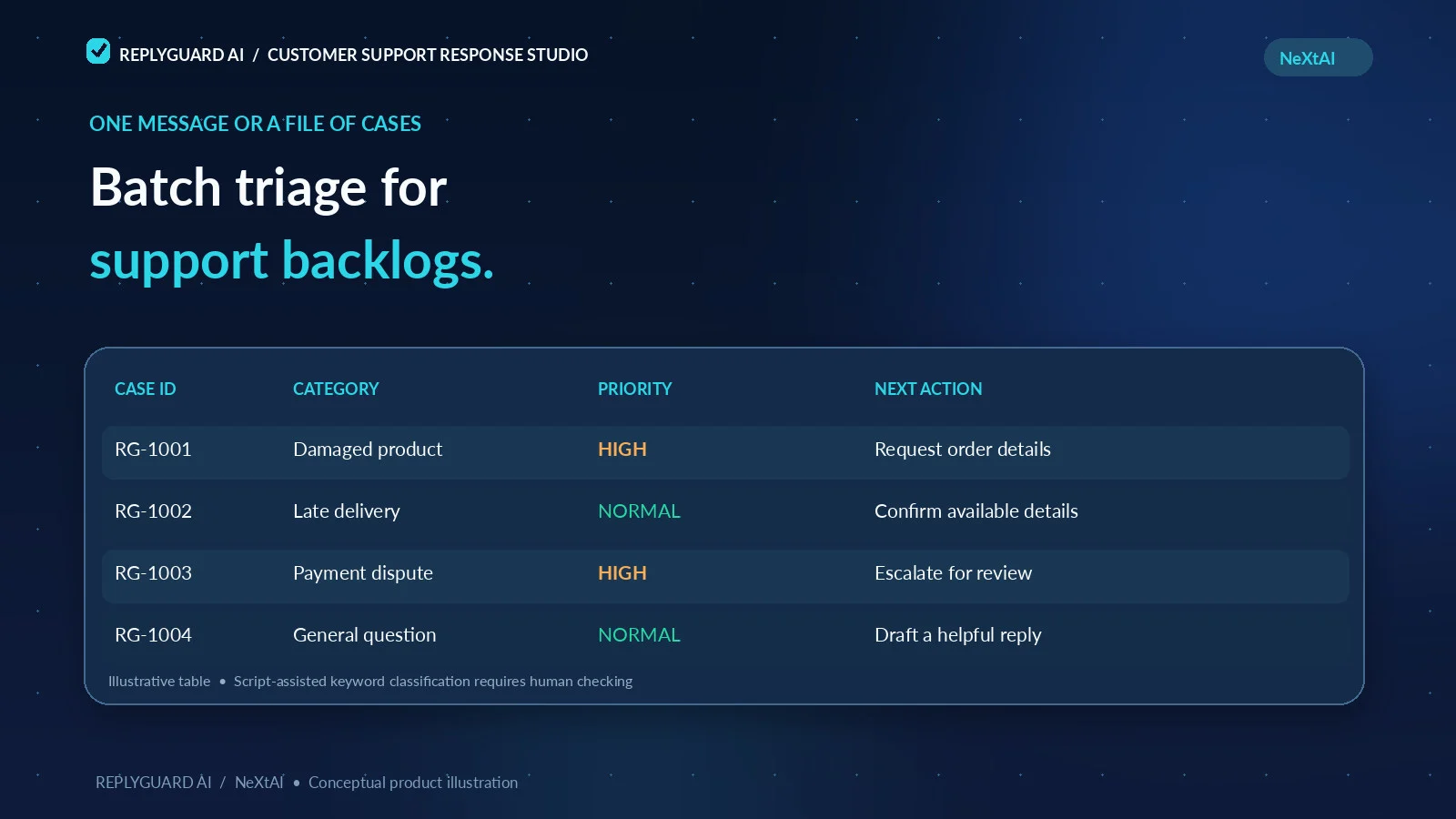
| 📋 Batch case triage | Work with CSV files containing case_id,message to produce a structured triage table when the Python script runtime is available. |
🔄 A simple, repeatable workflow
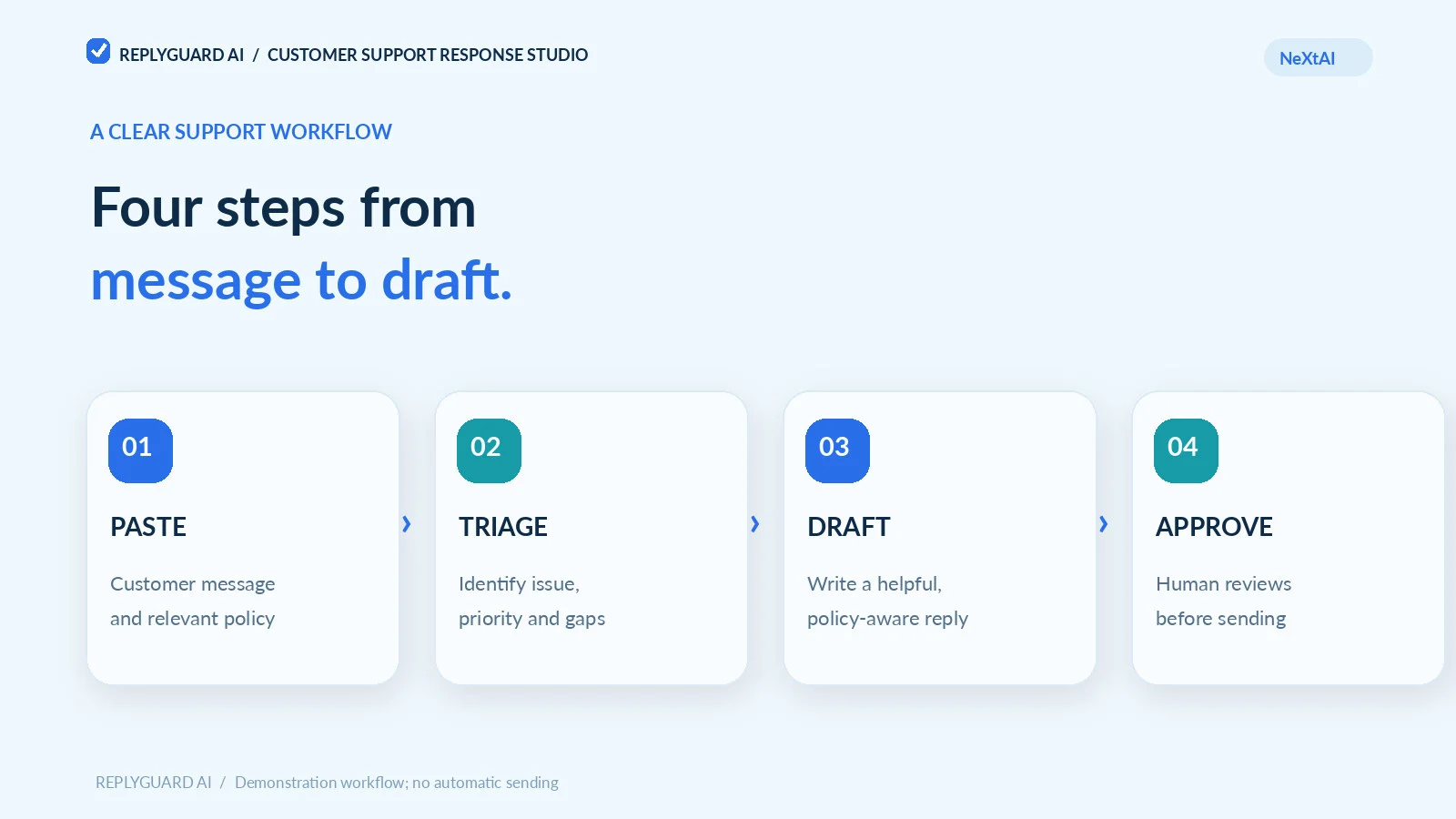
01 — PASTE the customer message or provide a CSV of cases. Add the applicable company policy if available.
02 — TRIAGE the problem: category, suggested urgency, missing facts, and possible human escalation.
03 — DRAFT a clear, respectful reply — without inventing refunds, order status, shipping promises, or legal conclusions.
04 — REVIEW the result. Your team approves, edits, and sends any final message outside the agent.
🧩 Common use cases
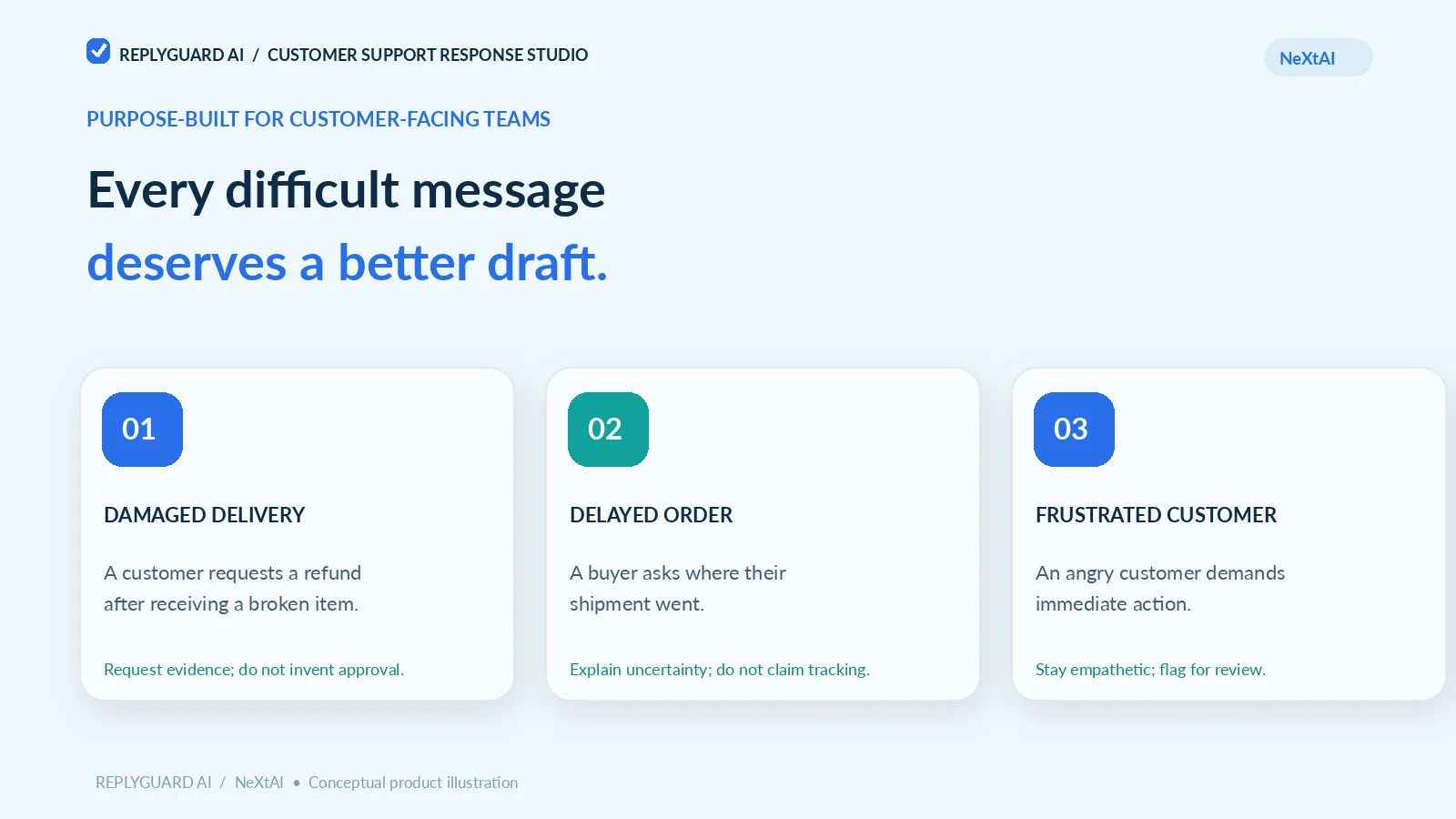
Damaged or defective orders — respond to a disappointed buyer without promising a refund that has not been approved.
Delayed deliveries — acknowledge frustration while avoiding made-up tracking information.
Returns and refund requests — check which policy conditions are actually known; request missing evidence.
Upset or frustrated customers — keep the tone human, respectful, and specific, even when the message is emotional.
Support inbox cleanup — use the included Python-supported CSV triage workflow to organize a collection of case descriptions.
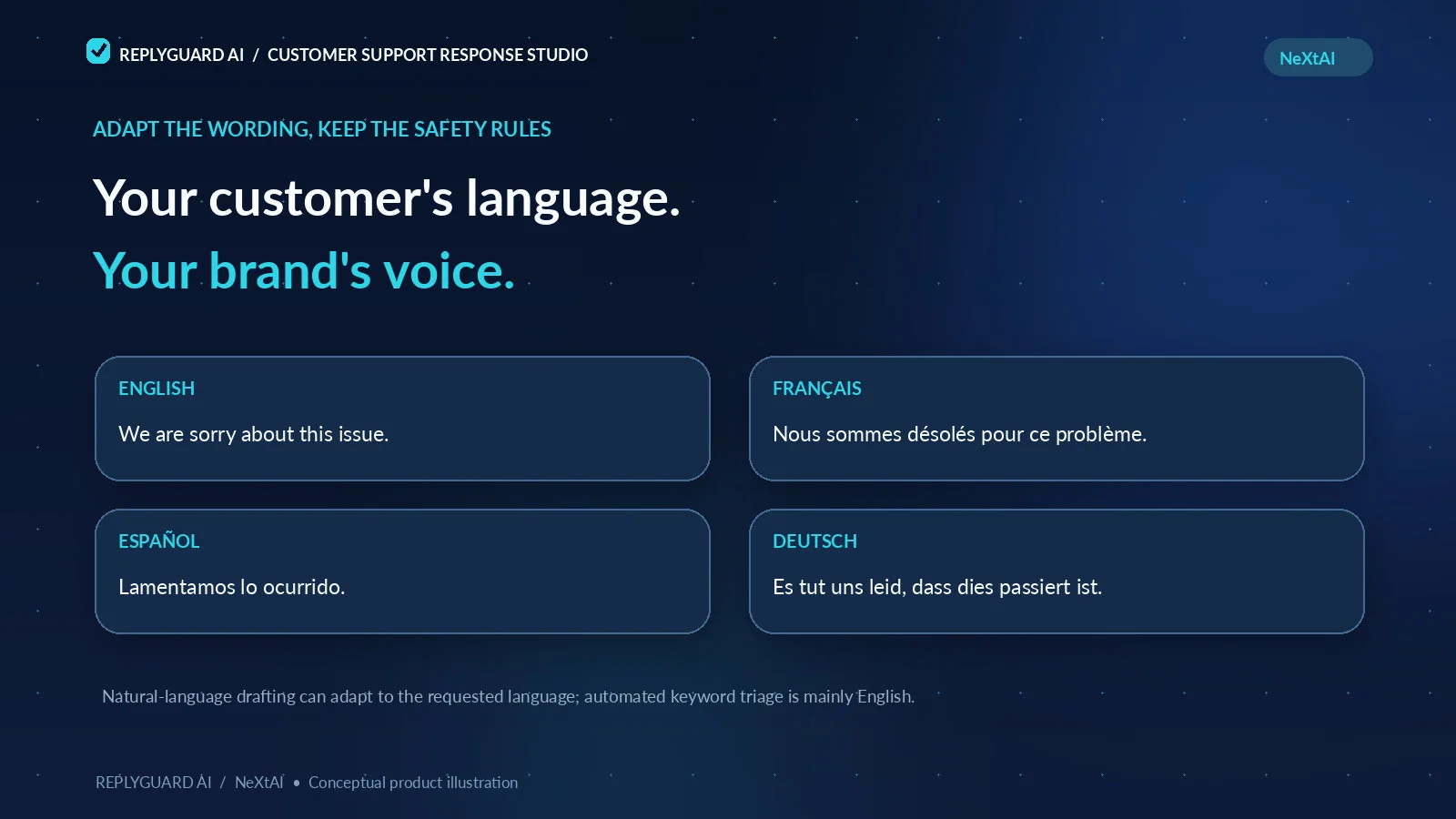
International communication — ask for the customer-facing draft in a specific language. Natural-language drafting can adapt; the deterministic script's keyword cues are mainly English.
👥 Built for people who answer customers
E-commerce owners: prepare thoughtful responses without building a complex support system.
Customer-service representatives: structure incoming complaints and identify what should be checked.
Support agencies & freelancers: create consistent first-draft replies for clients with different support policies.
Small operations teams: prepare a human-readable triage table before escalating individual cases.
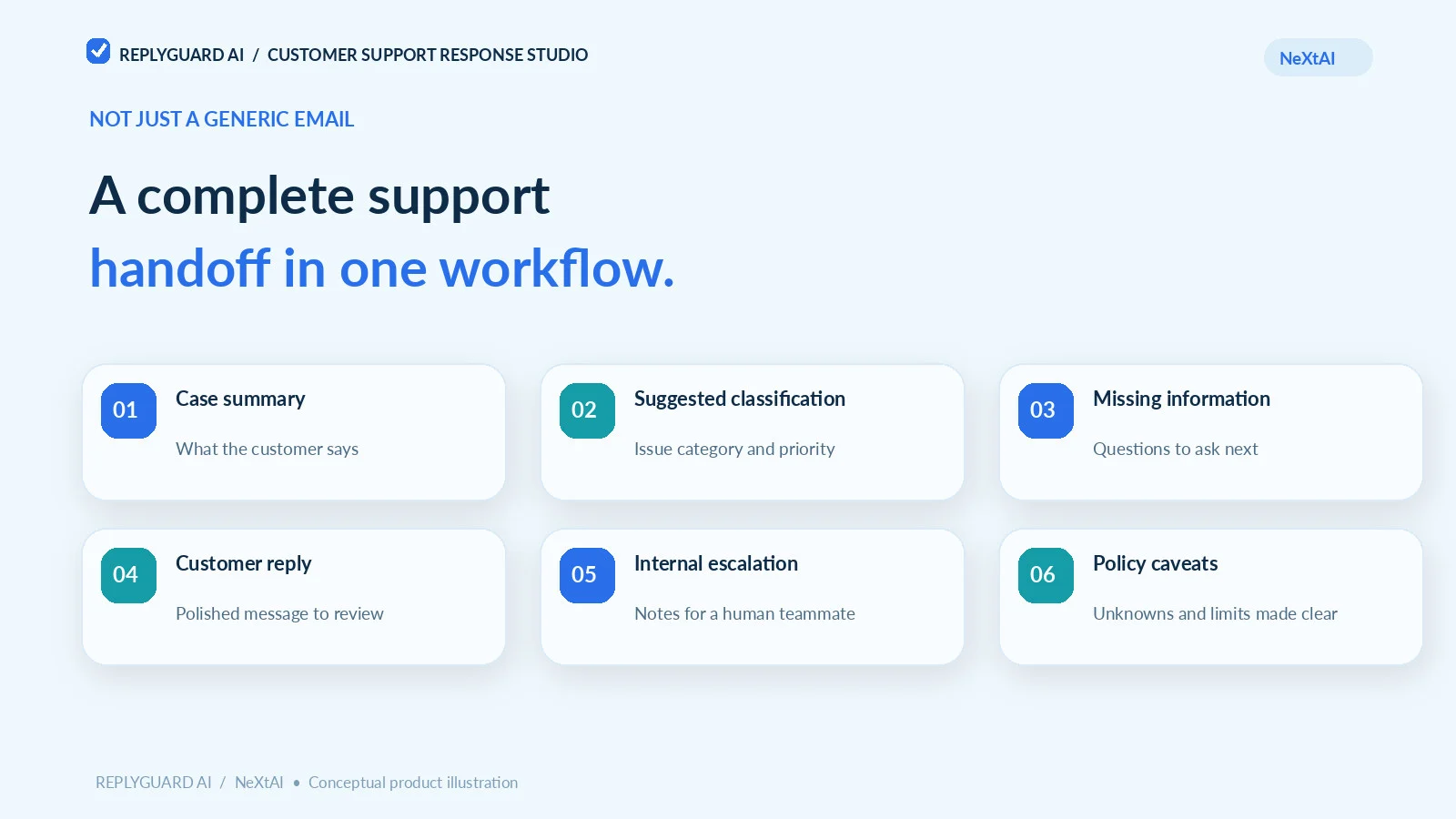
🧾 What a typical result contains
- Case summary — the facts expressed by the customer.
- Classification and suggested priority — with a short rationale.
- Missing details — important questions or evidence not provided.
- Customer-facing reply — a polished draft, not an automatically sent email.
- Internal note / escalation — when a colleague should step in.
- Assumptions and policy caveats — what the AI cannot independently verify.
🤝 Designed to respect human judgment
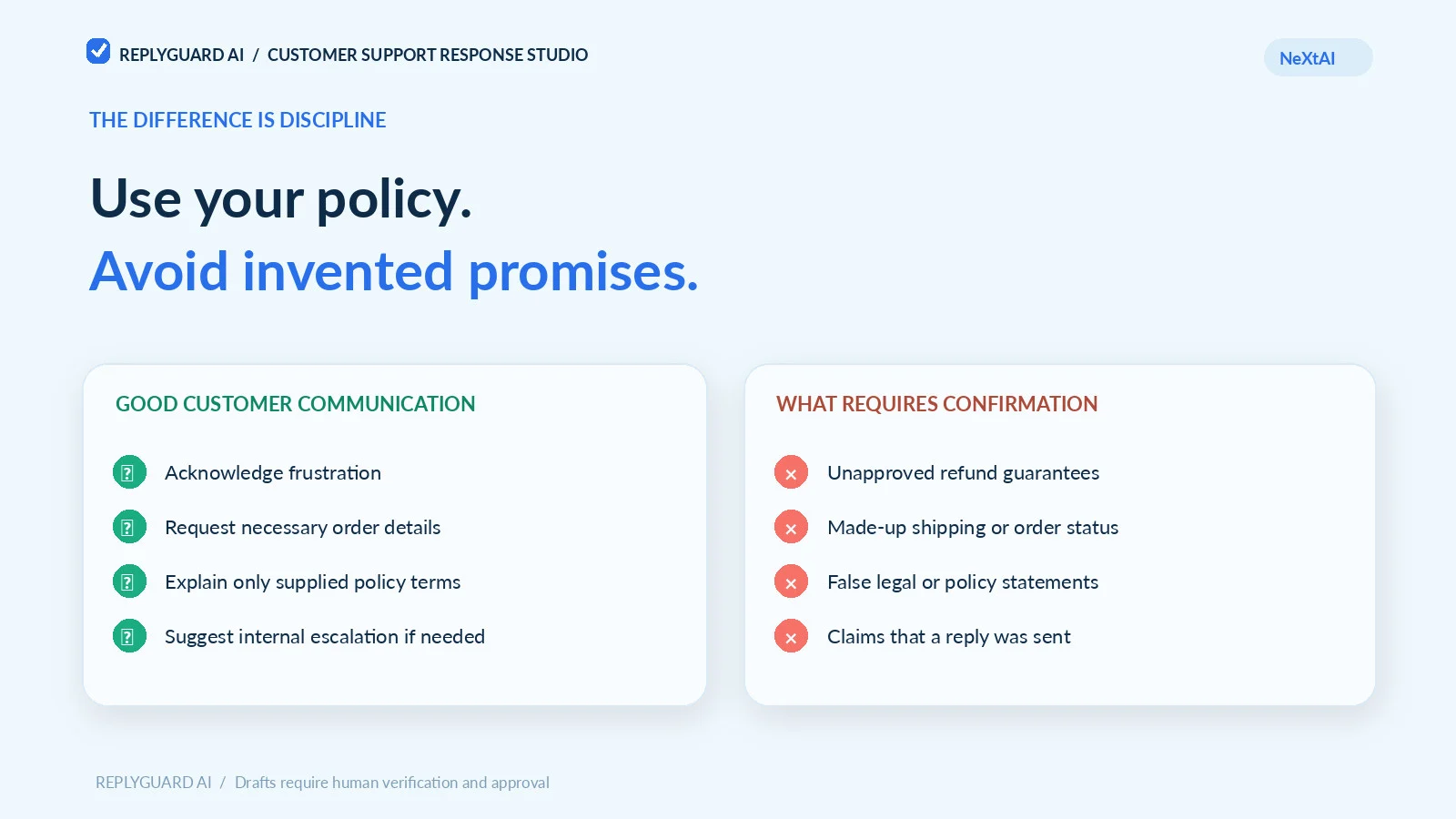
ReplyGuard AI does not connect to your inbox or order-management system by default. It does not fetch order statuses, process refunds, issue compensation, or send messages automatically. Its optional deterministic scripts use keyword cues to suggest classifications — not to certify sentiment or business facts.
All customer-facing responses require a human check against your current policies and the actual customer record. Avoid uploading passwords, payment-card data, identity documents, or unnecessary personal information.
🚀 Try this first
“Draft a warm, professional response to this customer complaint. Our policy requires an order number and photos for damaged items and a review within three business days. Summarize the issue, suggest a priority, identify missing details, and include an internal handoff note. Do not promise a refund.”
ReplyGuard AI — make the next customer response clearer, safer, and easier to review.
Published by NeXtAI. Demonstrations shown are synthetic and illustrative.