
Unbot — Humanize AI Papers & Text
✍️ Your AI Draft, Rewritten From Structure Up — Not Surface Down
🎯 What this rewrite produces
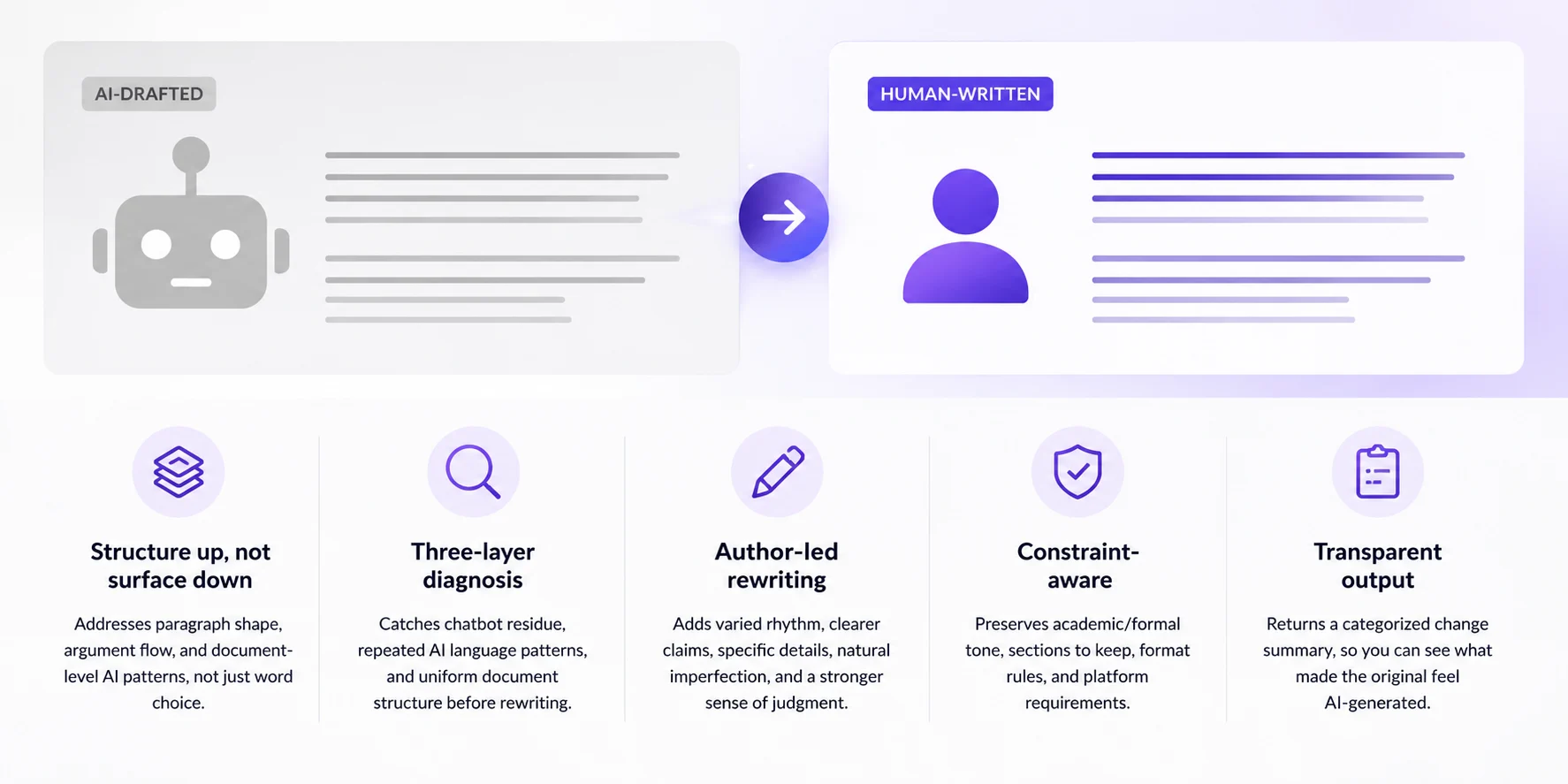
This skill rewrites AI-drafted essays, papers, thesis chapters, articles, reports, and other long-form prose so the final draft reads less machine-shaped and more author-led.
It is not a simple word-swap or synonym tool. It first diagnoses why a draft feels AI-generated, then rewrites the text from structure, language, rhythm, and voice.
Built for students, researchers, writers, and content professionals whose drafts need to sound more natural, more specific, and more clearly written by a real person.
You get back:
- 📄 The rewritten text
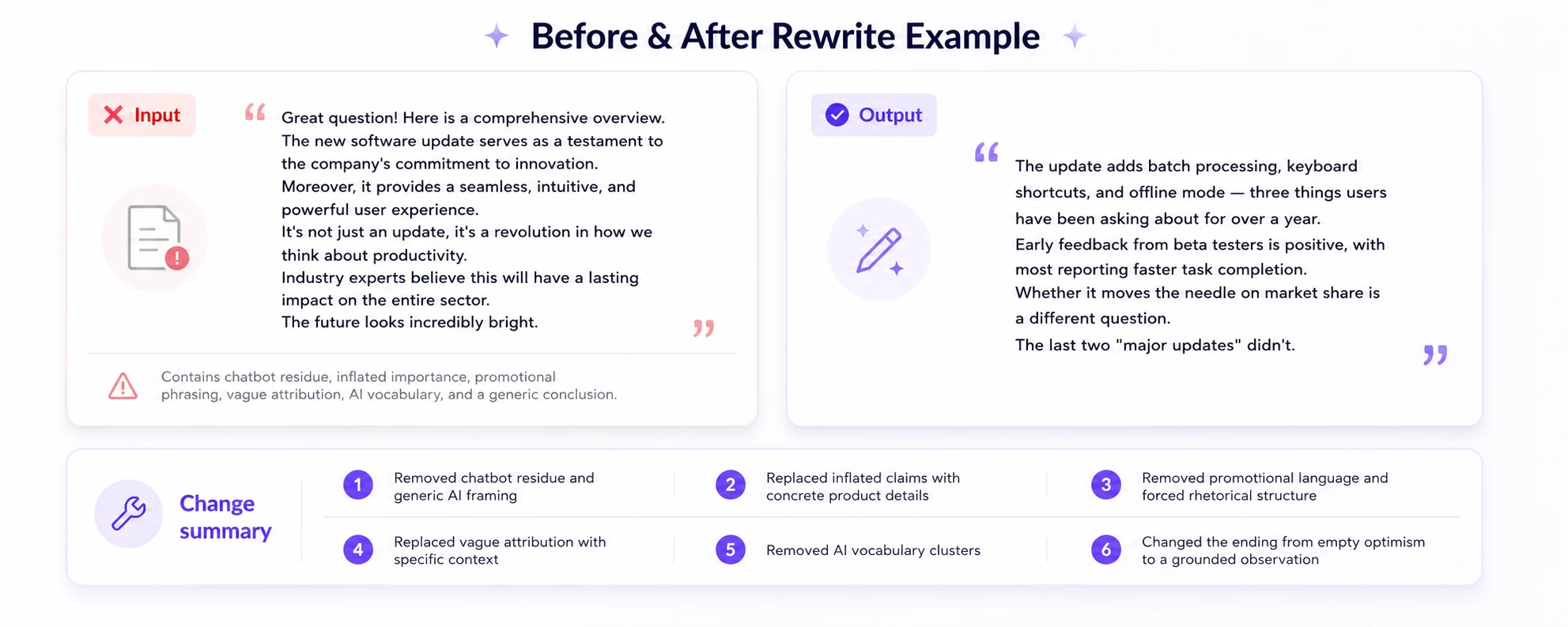
- 📋 A categorized change summary — what was fixed, and why
⭐ Why it doesn't just swap words
⚙️ Inside the five-pass rewrite
Understand the draft and constraints
Reads your text and any instructions you provide — target tone, academic level, sections to preserve, formatting rules, platform requirements, or voice constraints.
💡 No extra direction? It defaults to making the draft sound like a real person wrote it, while keeping the content clear and coherent.
Diagnose AI-like signals
Before rewriting, the draft is analyzed across three levels:
- 🔍 Surface signals — chatbot residue, citation artifacts, markdown residue, overly polished phrasing
- 🗣️ Language patterns — repeated AI vocabulary, vague claims, filler, inflated importance, synonym cycling, formulaic transitions
- 🏗️ Structural patterns — topic-sentence uniformity, even paragraph lengths, over-smooth transitions, symmetrical argument distribution
This targets the real source of the AI-like feel, not just individual phrases.
Rewrite the draft
Removes the detected patterns to make the prose more specific, natural, and author-led — tightening bloated phrasing, clarifying claims, varying sentence rhythm, cutting generic transitions, improving paragraph shape, and grounding vague or inflated wording.
Add human voice and judgment
Adds what clean text often still lacks: natural rhythm, sharper emphasis, honest complexity, specific observations, and a more real ending.
🎯 The goal isn't to make every draft casual — it's to make the writing sound like it came from a person with intent, context, and judgment.
Check the final result
Verifies the rewrite no longer reads like a chatbot, generic article, press-release paragraph, or overly smooth AI draft. If it still feels uniform, vague, polished, or formulaic, it adjusts before delivering.
📝 Before and after — software update paragraph
📥 What you can paste in
Paste any AI-drafted prose — from a single paragraph to a full document.
Supported content:
- 🎓 Essays, research papers, thesis chapters, academic drafts
- 📰 Articles, reports, blog posts, long-form professional writing
- 💼 LinkedIn drafts, publication drafts, and other prose that needs to sound less machine-shaped
- 🛠️ Optional instructions for tone, academic level, preserved sections, formatting, word count, or platform requirements
No strict input format — paste the text, and add a short instruction for anything that should stay unchanged.