

Reverse-engineer competitor ads into evidence-backed teardowns, selling mechanisms, and original campaign concepts.

Hands-on prompt engineering and LLM evaluation. Built around a diagnose-then-ship loop: forensic transcript critique ▎ that names the exact failure mode, paired with a fixer that produces complete, deployment-ready rewrites — not ▎ vague advice.

Check AI-generated claims against your approved Fact Sheet and flag changed quantities, expanded scope, dropped attribution, and unsupported mappings — deterministic, local, and no AI guessing.

Audits how your brand actually appears in AI-generated answers and generative search. GEOTrace queries real AI-answer providers, then measures mention rate, recommendation rate, citation rate, and competitor visibility from the evidence gathered — no fabricated results. Delivers a structured report with per-query findings, source domains, visibility gaps, and a prioritized action plan. Metrics are sample observations, not guarantees of ranking, traffic, or revenue.

Forces AI agents to verify every factual claim through live search before output — attaching [SPECULATION] and [UNVERIFIABLE] labels to anything unconfirmed, so fabricated URLs, outdated numbers, and invented citations become visible instead of silent.

Audit AI agent workspaces for authority, secrets, data flow, memory, supply-chain, and evidence risks—locally and without executing target code.

Découvrez le concurrent théorique le mieux placé pour exploiter vos faiblesses — avant qu'il n'existe.
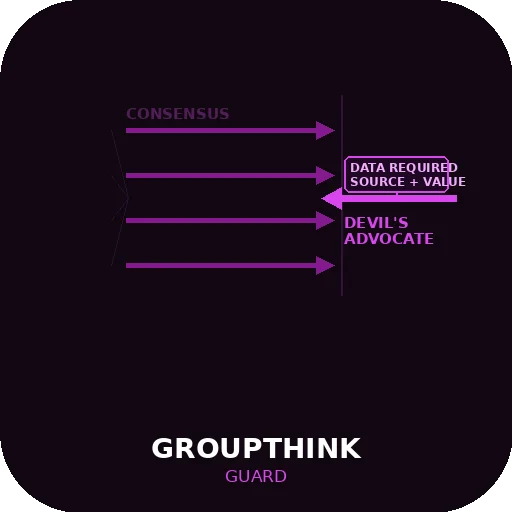
Activates a mandatory devil's advocate role the moment reviewers reach consensus — forcing one party to produce a specific failure scenario backed by data and a source before any conclusion is finalized, so agreement requires evidence, not just alignment.

Discover emerging trends using fresh public-web evidence from Google News, Hacker News, GitHub, and Wikipedia. OpenSignal analyzes signals, evaluates momentum, and turns findings into actionable content ideas and business opportunities. Built for transparency and evidence-based insights, it uses public endpoints without API keys, paid data subscriptions, or credit-card-backed APIs. Includes source attribution, anti-hype safeguards, and protection against malicious web content.