
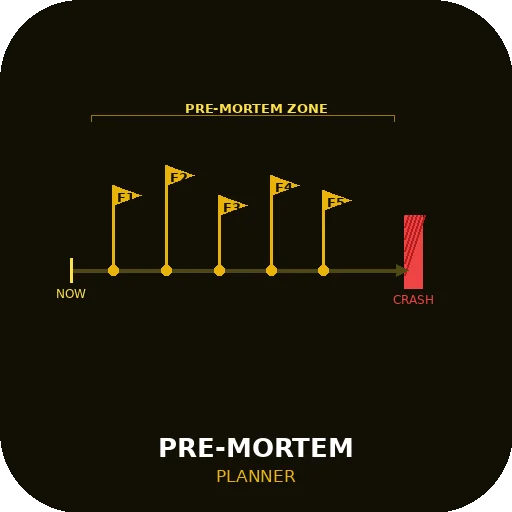
Forces AI agents to enumerate five specific failure scenarios before generating any output — at least one must be unique to the current task — then declare the single most likely failure and its mitigation, so every plan accounts for what could go wrong before committing to what might go right.
Turn pasted incident notes into a concise, time-stamped status update that keeps observed impact, unknown cause, planned work, and the next verification point clearly separate.

Created from 10+ years of manufacturing and industrial automation experience across food packaging, planter-part manufacturing, and Tier 1 automotive environments, with Ignition used in production-facing work over that span. The skill packages practical SCADA judgment around maintainable expressions, operator-safe behavior, troubleshooting habits, and realistic Designer/Gateway validation workflows.

Created from 10+ years of manufacturing and industrial automation experience across food packaging, planter-part manufacturing, and Tier 1 automotive environments, with Ignition used in production-facing work over that span. The skill packages practical SCADA judgment around maintainable expressions, operator-safe behavior, troubleshooting habits, and realistic Designer/Gateway validation workflows.

A scan tells you what is wrong. This tells you what to do. Same engine as the ADA Website Risk Scanner — 14 WCAG 2.2 AA check families. But instead of a defect list, you get a work plan: findings grouped into batches, ordered by exposure reduced per hour of developer time, each with before/after code, effort estimate, required skill, and a verification step. Three phases. Quick wins first. A project manager can assign it as-is.
Turn pasted project risks into an evidence-bound register with clear triggers, mitigation options, ownership gaps, and a focused next-review agenda.

Find live creator and editorial topics from a global Radar, then turn one into an evidence-backed brief with research questions, must_verify, avoid_claims, and visual requirements.

Turn incomplete Jira tickets, JSM requests, PRDs, User Stories, and meeting notes into requirements that Engineering can build, QA can test, and Product can accept. Automatically identify requirement gaps, business rules, permissions, validations, UI/API behaviors, exceptions, and edge cases, then generate User Stories, Given/When/Then Acceptance Criteria, PM Checklists, QA Test Cases, risk analysis, and a Requirement Readiness Score based on the selected mode.

Systematic QA of CLI tools and pipelines across multiple real workspaces using SFDPOT heuristics. Executes structured test flows, evaluates consistency oracles, collects evidence, and produces a structured bug report with P1/P2/P3 priorities and a release readiness verdict.