
Short Drama Prompt Skill: One-Day AI Workflow
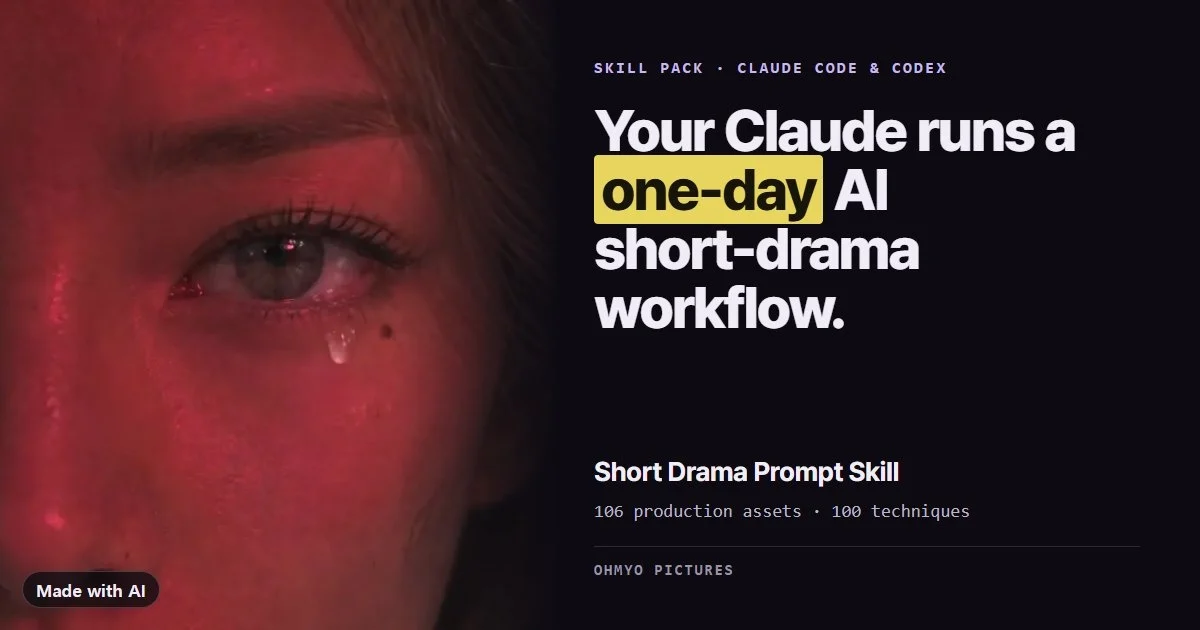
A production workflow for AI short dramas, written by a video producer with 15 years in ads, film and web drama. Your agent takes a one-line idea through eight stages and stops for your approval at each one.
Scenes from Quantum Eden, our own AI short drama. Made with AI.
What it does
- Story and script. Picks one of six story formulas for your genre, builds the beat sheet, then writes numbered cuts: action, expression, one line of dialogue, sound.
- Characters and locations. Character sheet and location sheet prompts, so faces and places hold from cut to cut.
- Shot design. Frame size, angle, one camera move and an end frame for every shot.
- Storyboard. Start frames for the first batch, including 2×2 panels.
- Video prompts. Seedance 2.5 templates, multi-shot and 30-second formats, with notes for Seedance 2.0 and Kling 3.0.
- Edit and fixes. Edit values, sound density by genre, fixes for 11 common problems, a dialogue check and a pre-publish checklist.
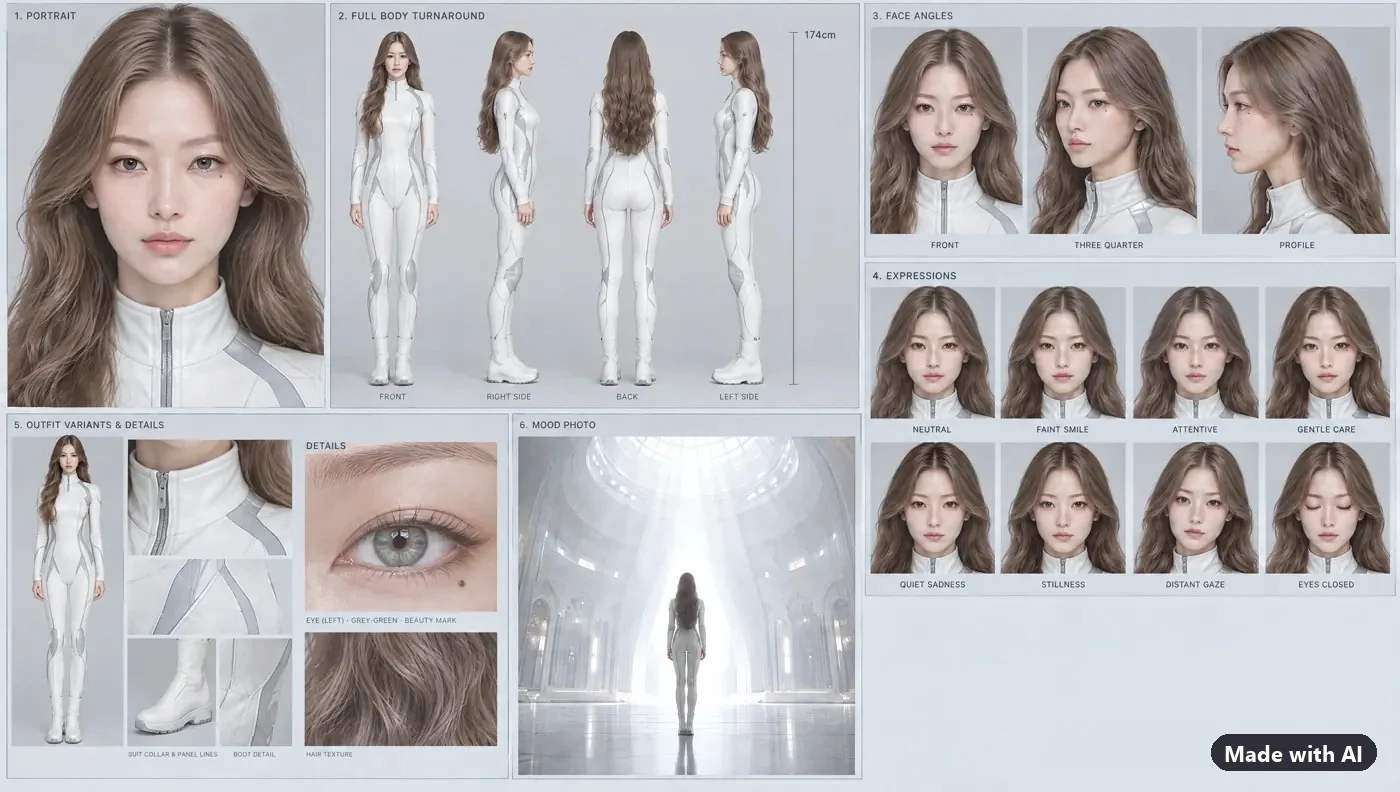
A character sheet from our own production: portrait, full-body turnaround, face angles, expressions and outfit details.
How it works
- One question at a time. Each stage ends only when you approve it.
- Stages 1 to 6 are text and still images. No video credits are spent there.
- Lock the board before you render. Video starts with a 15-second test batch; the rest follows only after you check it.
- Before any paid generation it looks up your balance and the current price, shows a quote table (model, resolution, aspect ratio, length, credits) and waits. If your agent isn't connected to a generation service, it hands you the prompts to paste yourself.
- It replies in your language. Prompts for image and video models are written in English.
Four key frames, then the same four shots as video. An umbrella fight in the rain, starring Ohmyo, our AI host. Made with AI.
What's inside (Download: you get the files)
- SKILL.md plus 10 reference guides: setup, story, script, characters and locations, shot design, storyboard, video, edit and fixes, 100 techniques, one-day plan
- 21 step-by-step prompts (P01 to P21), from setup to the next episode
- 106 production assets: story formulas, frame sizes, direction by scene type, blocking and acting formulas, sheet layouts, video templates, edit values, fixes and checklists
- 100 camera and acting techniques, each with when to use it and a phrase to paste
- A one-day plan and a fully worked example, "The Package from Tomorrow"
- Three example images: a character sheet, a location sheet and a 2×2 storyboard
9 of the 32 camera moves in the technique list, tested on Ohmyo, our AI host. One move per shot. Made with AI.
See it in action
You type:
Plan a 1-minute mystery short in one day. My idea: a package that's due tomorrow shows up at my door today.
Your agent replies (the worked example in the skill):
Project card
- Title: The Package from Tomorrow
- One-line story: A package due tomorrow is sitting at the door today.
- Story type: Mystery twist
- Lead and location: Maya, the hallway of an old apartment building
- Length and aspect ratio: 60 seconds, 9:16 (vertical)
Beat sheet (mystery twist)
- Clue: the shipping label shows tomorrow's date
- Situation: Maya opens the box and finds the photo
- Threat: the hallway lights go out and wet footprints come closer
- Twist: the watch in the photo is Maya's
- Cliffhanger: the doorbell rings, and from outside comes Maya's own voice
First cuts
- C01, 3 s: a hand holding the shipping label; her eyes stop on the date. Maya: "That's tomorrow's date?"
- C02, 3 s: she drags the package inside and shuts the door.
- C03, 4 s: she slices the tape with a box cutter; inside is a single photo. Maya: "What is this?"
Next: "Lock this beat sheet and these first cuts? Then we build Maya's face reference and the hallway location sheet. No video credits until the board is locked. When we get to video, the first batch is a 15-second test, quoted before it runs."
The full worked example in the skill continues with every cut, shot design and the quote check. Your agent's wording will differ.
Compatibility
Tested with Claude Code and Codex. Works with agents that load SKILL.md skills. Image and video generation runs on your own account with a service such as Higgsfield or Dreamina; generation credits and your AI plan are not included. Setup steps cover Windows and Mac.
Where it stops
- It does not generate images or video by itself. Generation runs on your own account, and credits are extra.
- It doesn't include a production dashboard or an editing app. It guides the edit; you cut in your own editor.
- Results depend on the video model and on your choices. No promises about quality, production time, views or revenue.
- Prices and models of AI services change. The skill gives no credit numbers; it asks for a fresh quote each time.
- Written for short dramas of about one minute. Longer pieces use the same proportions.
- The reference files are in English. Your agent replies in your language.
- Some Higgsfield links in the setup reference are affiliate links (?fpr=hozfbn). This is disclosed in the file and costs you nothing extra.
FAQ
Does it make the video for me?
No. It plans, writes the prompts and checks the results with you. If your agent is connected to a generation service on your own account, it shows a quote and waits for your OK before any paid run.
Which video models does it cover?
Seedance 2.5 templates, with notes for Seedance 2.0 and Kling 3.0. Image prompts work with the image model of your choice.
What do I need?
Claude Code or Codex, and your own account and credits on a generation service such as Higgsfield or Dreamina.
Vertical or horizontal?
Both. The worked example is 9:16 vertical; the formats include 16:9.
Built from real production: the rules come from a working AI production dashboard and real Seedance 2.5 generations. Example images show frames from our own AI productions. Made with AI.