

Reverse-engineer competitor ads into evidence-backed teardowns, selling mechanisms, and original campaign concepts.

Hands-on prompt engineering and LLM evaluation. Built around a diagnose-then-ship loop: forensic transcript critique ▎ that names the exact failure mode, paired with a fixer that produces complete, deployment-ready rewrites — not ▎ vague advice.

This agent helps Python teams using the Anthropic or OpenAI SDK safely cut LLM spend without risking regressions. With zero code changes, it maps call sites and runs your test scenarios to rank token waste from missed prompt caching or heavy model tiers. It tests fixes in isolated git worktrees, enforcing a strict "do-no-harm" gate that reverts any patch failing to preserve behavior. It delivers a clear savings audit that converts into verified, behavior-preserving code patches upon opt-in.

Check AI-generated claims against your approved Fact Sheet and flag changed quantities, expanded scope, dropped attribution, and unsupported mappings — deterministic, local, and no AI guessing.

Audits how your brand actually appears in AI-generated answers and generative search. GEOTrace queries real AI-answer providers, then measures mention rate, recommendation rate, citation rate, and competitor visibility from the evidence gathered — no fabricated results. Delivers a structured report with per-query findings, source domains, visibility gaps, and a prioritized action plan. Metrics are sample observations, not guarantees of ranking, traffic, or revenue.

Forces AI agents to verify every factual claim through live search before output — attaching [SPECULATION] and [UNVERIFIABLE] labels to anything unconfirmed, so fabricated URLs, outdated numbers, and invented citations become visible instead of silent.

Audit AI agent workspaces for authority, secrets, data flow, memory, supply-chain, and evidence risks—locally and without executing target code.

Découvrez le concurrent théorique le mieux placé pour exploiter vos faiblesses — avant qu'il n'existe.
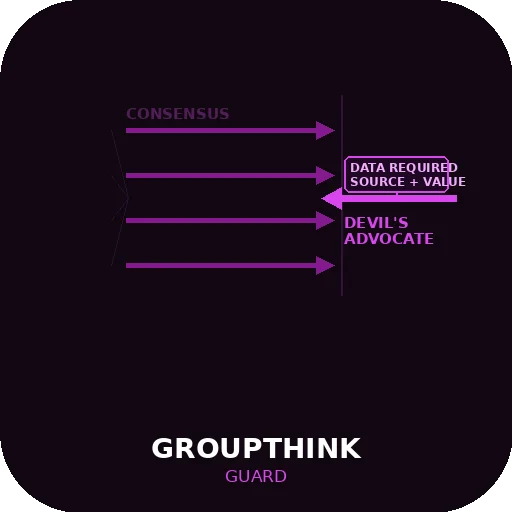
Activates a mandatory devil's advocate role the moment reviewers reach consensus — forcing one party to produce a specific failure scenario backed by data and a source before any conclusion is finalized, so agreement requires evidence, not just alignment.