

A kickoff protocol (agent skill) for multi-step tasks. Before writing any code, the agent must: run a spec interview, batch every human-authorization step into one checklist, build a self-verification loop (log sink + verify script + dry-run) *before* the feature itself, and build comparable variants instead of blocking on third-party decisions.
Agent Team checks the plan your agent writes for a task and keeps several AI agents in step through plain files in your repository. For developers and small teams who run more than one agent on a project. flow.py checks a JSON plan (role, model tier, dependencies and a verify line per step), sorts it into parallel waves and prints each worker's brief. team.py handles handoffs: send, inbox, claim, done, status board, check. Two standard-library Python scripts. No network calls, no API keys.

Hands-on prompt engineering and LLM evaluation. Built around a diagnose-then-ship loop: forensic transcript critique ▎ that names the exact failure mode, paired with a fixer that produces complete, deployment-ready rewrites — not ▎ vague advice.
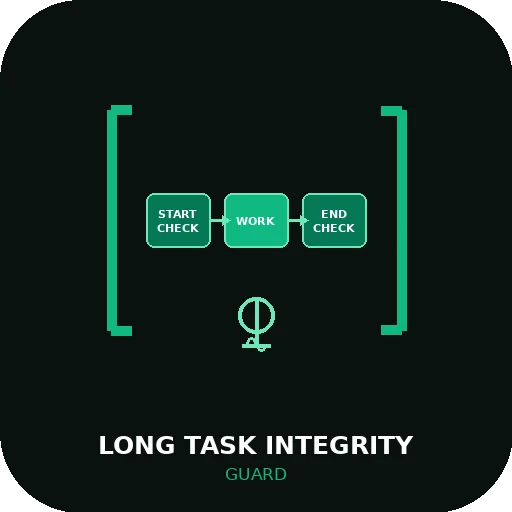
Wraps each phase of a long AI task in a start-check / work / end-check bracket — and re-anchors the original instructions at every phase boundary so the agent cannot drift from its rules or skip verification as the session grows longer.
Forces AI agents to prove a task is actually done before declaring it complete. 4-phase gate: instruction reconciliation, evidence anchoring (values only readable from the actual output), self-scoring (A/B/C/D), and reverse witness check. Eliminates "done" declarations that aren't.

One operator, five workflows that replace a patchwork of tools.
Hand work to subagents and get back results you can actually act on. A subagent that fails will often produce a plausible answer anyway - URLs that 404, numbers nobody checked, all reading as confidently as a correct report. This covers what delegates well and what quietly does not, the five things a brief needs before the output is usable, why asking for the dead ends tells you how carefully the work was done, and what to re-verify by hand before acting.
Review AI agents, automation workflows, and project architectures for design gaps, risks, missing requirements, and improvement opportunities.

I've spent months building my AI agent infrastructure with cost-efficient models (DeepSeek + Qwen), using them daily for content creation, strategy, and automation. I built SplitBrain after hitting the same wall every solo brainstorm: by round 3, a single AI just parrots you. Two complementary models, 10 minutes max, signal over noise. No corporate team. No committee. Just a self-taught creator who optimized the brainstorming loop and wants you to stop burning tokens on diminishing returns.