lead magnets - marketingskills online
What It Does
This skill designs lead magnets that filter for the right prospects, not just bigger email lists.
It is built for founders, marketers, SaaS teams, agencies, consultants, and content teams that have expertise, existing content, templates, frameworks, or product insight they could turn into a lead capture offer.
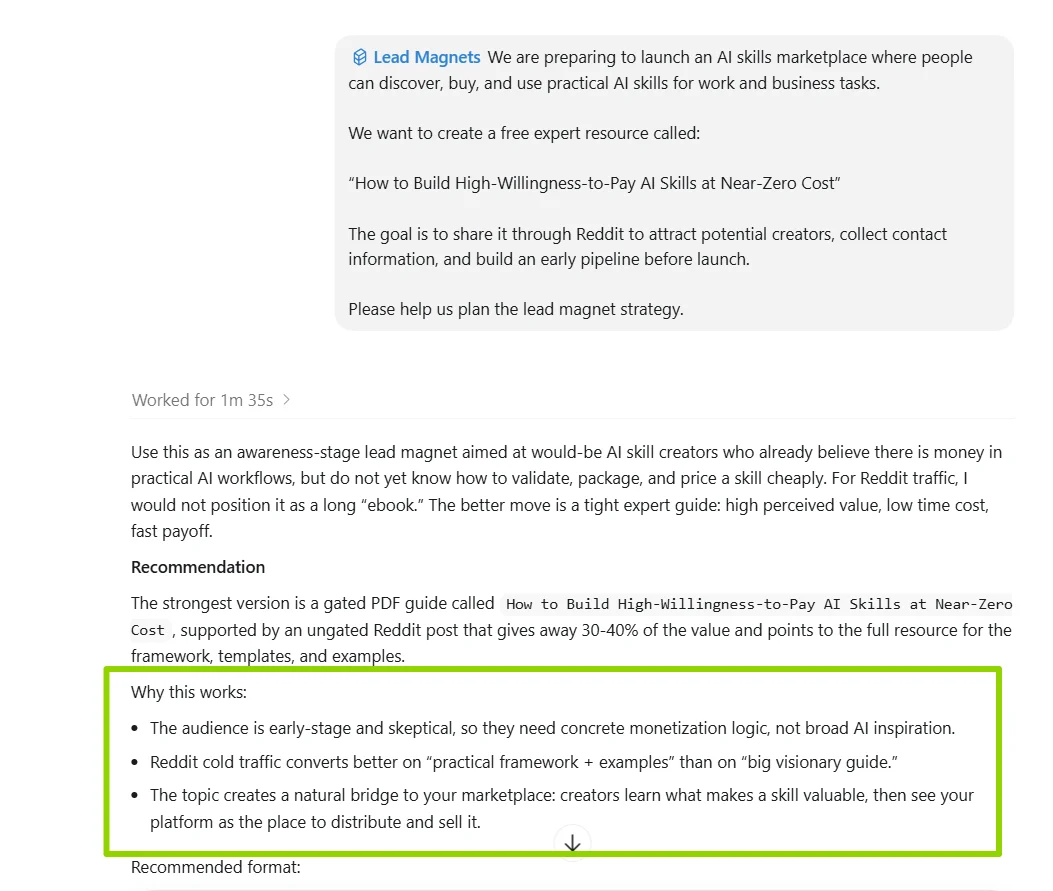
- These are the kinds of pitfalls only someone who has actually built ineffective lead magnets would think to warn you about. That experience has now been distilled into this skill.
What Makes It Different
This skill is useful when "we need a lead magnet" is too vague to build something valuable.
It catches the things most lead magnet plans skip:
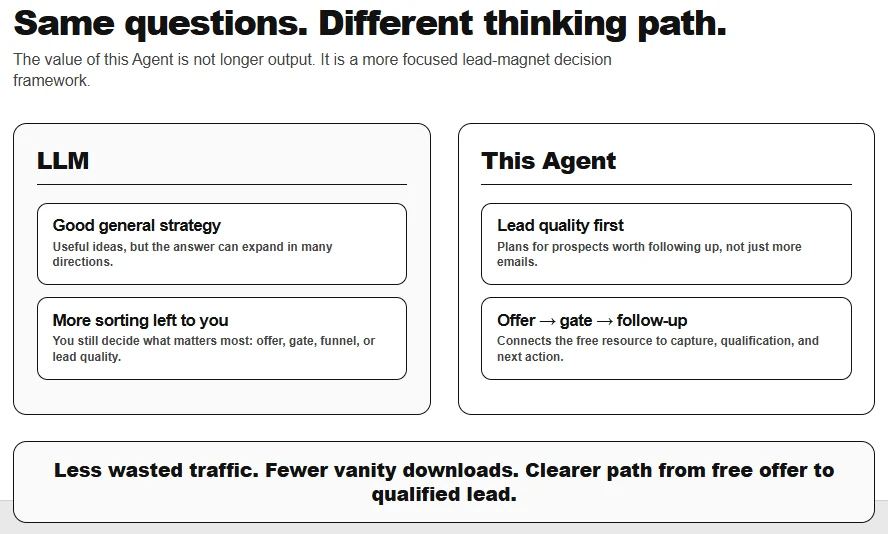
- It starts with lead quality, not email volume.
Many lead magnets win the opt-in and lose the pipeline. They attract people who want a free PDF but do not match the ICP, never open the next emails, never return to the site, and never move toward trial, demo, or purchase.
This skill designs the offer around right-fit prospects first. It uses lead quality signals such as email engagement, product-page clicks, ICP match, return visits, trial or demo movement, unsubscribe behavior, and later customer conversion.
- It matches the bait to buyer stage.
Awareness leads need education. Consideration leads need comparison, evaluation, or diagnosis. Decision-stage leads need implementation help, ROI framing, migration support, templates, or trials.
The skill chooses the format and topic based on where the prospect is in the buying journey, so the offer does not attract curious readers who are nowhere near product interest.
- It decides what should be gated.
Most teams gate by habit. This skill chooses between full gate, partial gate, ungated plus optional capture, and content upgrade. It also decides how much to ask for: email only, email plus name, role/company, or multi-field forms only when the offer is valuable enough to justify the friction.
That matters because every extra field can raise lead quality while lowering conversion. The plan makes that trade-off explicit.
- It uses format guidance instead of format guessing.
The built-in format guide covers 11 lead magnet types, including checklists, cheat sheets, templates, swipe files, ebooks, mini-courses, quizzes, webinars, resource libraries, trials, and community access.
Each format has a different job. A checklist can deliver a quick win. A template can attract high-intent operators. A quiz can segment the audience. A webinar can qualify fewer but stronger leads. The skill chooses the format based on the buyer stage, effort required, time to create, and path to product.
- It uses benchmarks to keep expectations honest.
The benchmark reference includes conversion ranges by format, traffic source, and industry. It also includes quality-vs-volume patterns, cost expectations, creation timelines, and lead quality indicators.
That helps the user know whether a 10% landing page conversion rate is weak, normal, or strong for the traffic source and offer type.
How It Works
The skill starts with the inputs that separate a real lead engine from a content giveaway:
- Business context and ideal customer
- Current lead generation setup
- Existing content or expertise that can be repurposed
- Product path after the opt-in
- Target buyer stage and lead quality goal
- Resources, timeline, and traffic channels
From there, it maps the offer:
- Audience and ICP fit
- Buyer stage
- Lead magnet topic and promise
- Format choice and why that format fits
- Gating strategy and form fields
- Landing page structure
- Delivery method and thank-you page next step
- Distribution channels
- Lead quality metrics and conversion benchmarks
- First tests to run
The plan uses the format guide for creation details and the benchmark guide for conversion and quality expectations.
What The Output Looks Like
Users receive a lead magnet plan that explains what to build, who it should attract, and how to tell whether those leads are worth pursuing.
Users receive:
- A clear recommendation for what to create
- The target prospect and buyer stage
- Why that format fits the audience, stage, effort level, and product path
- What should go inside the offer
- What should be gated, previewed, or left open
- What fields to ask for and why
- Landing page structure and delivery flow
- Distribution channels matched to the offer
- Benchmarks for expected conversion by format or source
- Lead quality signals to watch after the opt-in
- First A/B tests for headline, format, gate level, form fields, CTA, or delivery
Typical Use Cases
- Decide whether to create a checklist, template, guide, quiz, webinar, or mini-course
- Turn existing blog posts, internal processes, or expertise into a downloadable offer
- Improve a weak gated asset that gets downloads but poor-quality leads
- Plan a lead magnet that fits a specific audience stage, from awareness to decision
- Build a stronger email capture strategy around content, landing pages, and promotion
- Decide whether an offer should be fully gated, partially gated, or ungated
- Use benchmarks to judge whether a lead magnet is underperforming or attracting the wrong people
Example
Input
We want a lead magnet for founders exploring AI agents. We have internal frameworks, real implementation lessons, and some existing posts. Our goal is to capture qualified leads who might later buy agent-related services. Help us figure out what to create and how to distribute it.
Output
A lead magnet plan that defines the right prospect, buyer stage, format, topic, gate level, landing page, delivery flow, distribution channels, lead quality signals, and benchmark-based KPI targets so the offer attracts founders with real product interest instead of free-content collectors.
Inputs It Handles
Users can provide:
- What your business sells
- Who the audience is
- What content, frameworks, or expertise you already have
- What kind of leads you want
- Where you plan to promote the offer
- Whether the offer is top-funnel education, evaluation help, or decision-stage implementation
- Traffic channels you can use to promote it
It can still help when the user only has a rough idea, such as "we should make a checklist," by checking whether that is the right bait for the right prospect at the right stage.
Best For
- SaaS and product teams growing an email list with stronger intent
- Consultants and agencies packaging expertise into downloadable offers
- Founders building a top-of-funnel asset that leads into product adoption
- Marketers who want better lead quality, not just more opt-ins
- Teams tired of downloads that never become conversations