

Postplan — From Pillars to Calendar
📱 Stop Posting Randomly — Build a Social Media System Tailored to Your Business
📋 The system you'll end up with
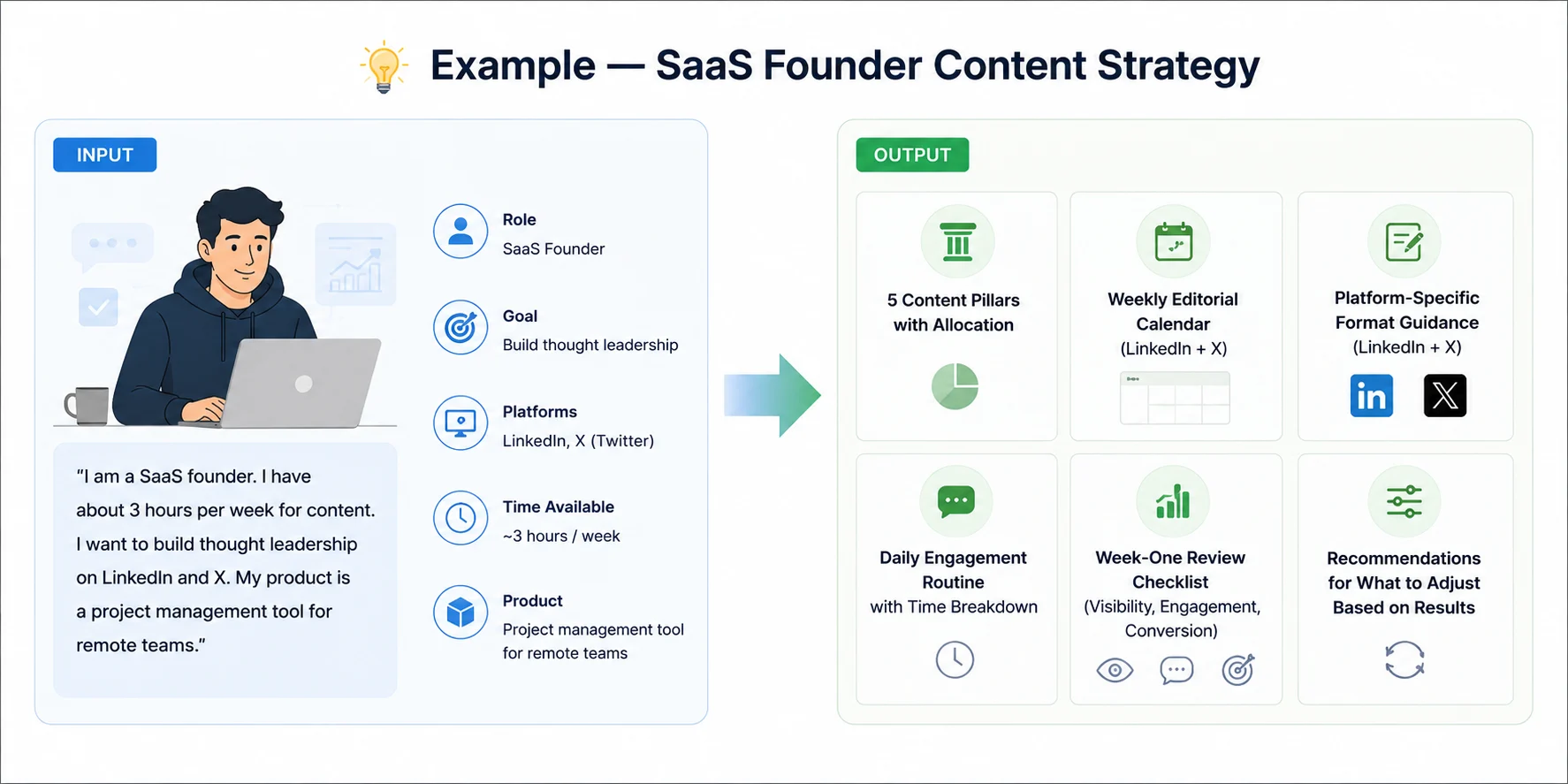
This skill turns your business goals, target audience, platforms, and available weekly hours into a repeatable social media system you can run week after week.
Built for founders, marketing leads, and solo operators who already know they should post consistently, but lack a clear system for deciding what to post, where to post, and how often.
You get back:
- 🧱 3–5 content pillars with allocation ratios
- 📅 a weekly editorial calendar across your chosen platforms
- 🎙️ platform-specific format and tone guidance
- 💬 a daily engagement routine built around your available time
- 📊 a weekly performance review framework
- 🔍 optional reverse-engineering analysis of top creators in your niche
🛠️ How the system gets built
Understand your position. Identifies the four inputs that shape the strategy: business goal, target audience, brand voice, and available weekly hours. Supported goals include brand visibility, lead generation, traffic, community building, personal or company brand growth, or a mix.
Design your content pillars. Recommends 3–5 content pillars — industry insight, behind-the-scenes, practical tutorials, personal perspective, community engagement, product-related — each with an allocation ratio so your mix is intentional instead of guessed each week.
Build the weekly editorial calendar. Maps your pillars into a platform-specific posting plan: LinkedIn for insight-led narratives or carousels, X for threads or opinion posts, Instagram for visual formats, TikTok for short-form video ideas or captions. The calendar tells you what to publish, where, and how each post supports the strategy.
Plan the engagement routine. Growth doesn't come only from posting, so the skill designs a daily routine — replying to comments, commenting valuably on target accounts, sharing others' work with your own perspective, starting conversations with new connections — sized to the time you realistically have so it stays maintainable.
Set up the review framework. A weekly review across three metric layers:
- 👀 Visibility: reach, impressions, follower growth
- 💬 Engagement: comments, saves, shares, reposts, engagement rate
- 🎯 Conversion: link clicks, profile visits, DM inquiries, attributable leads
When numbers move, the framework tells you what to inspect and adjust — hooks, posting times, formats, outbound engagement, or platform mix.
Reverse-engineer what already works. Given examples of top creators you provide — or by identifying 10–20 benchmark creators with strong engagement when you don't have specific examples — extracts repeatable patterns (hooks, formats, topics, calls to action, story structures, engagement triggers) and helps you adapt them with your own voice. Not to copy competitors, but to build a playbook from what already earns attention in your space.
📥 What to send in
You can provide:
- a business description or plain-language explanation of what you do
- your target audience and primary business goal
- the platforms you want to focus on
- how many hours per week you can spend on content
- brand voice or style guidelines
- existing analytics, past posts, or high-performing examples
- creators or accounts you want to reverse-engineer
- content assets you already have, such as blog posts, podcasts, videos, webinars, or newsletters
No prior content strategy is required — the skill can build from scratch or improve an existing system.


