UGC Test Pack — 5 Controlled Variations
Turn one UGC ad into a control plus four production-ready variations that test one variable at a time.
#行銷#社群媒體#影片
評分
需要更多評價
已售出
0
使用方式
在 Capafy 上執行
也可用於外部應用程式
由創作者提供
GPT-5.4
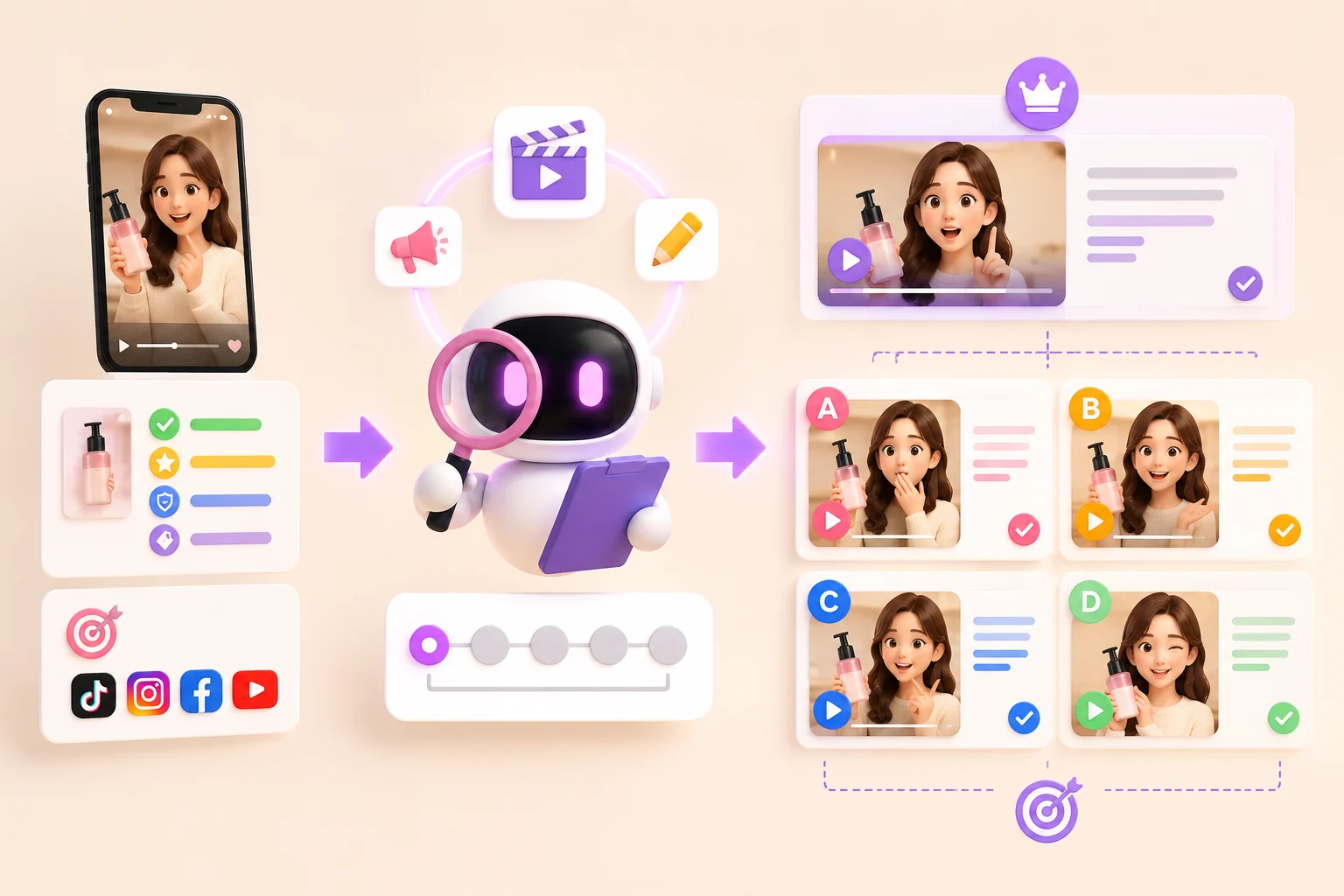
Not Five Random Scripts. One Controlled Experiment.
UGC Test Pack turns one approved UGC ad into a control plus four production-ready variations.
Every variation tests the same selected variable while keeping everything else fixed—so you can understand what actually changed.
What You Can Test
Choose one variable per pack:
- Hook
- Advertising angle
- CTA
- Opening visual
- Creator framing
- Another clearly defined single variable
What You Provide
- Your baseline UGC script, brief, storyboard, or concept
- Product facts and approved claims
- The variable you want to test
- Target platform and campaign objective
- Optional primary metric
What You Receive
CONTROL
Your supplied baseline, preserved as the comparison cell.
FOUR CONTROLLED VARIATIONS
Each variation includes:
- Test hypothesis
- Exact hook
- Creator dialogue
- Shot list
- On-screen text
- CTA
- What changed
- What stayed fixed
- What the variation tests
- Shared primary metric
Built for Interpretable Testing
If you select a Hook Test, only the hook changes.
The body, claim, offer, CTA, duration, creator framing, and shot order remain fixed.
If you want to test another dimension, run a separate pack. This keeps each experiment clear and comparable.
Truthful by Design
UGC Test Pack does not invent:
- Customer experiences
- Reviews or testimonials
- Product results
- Prices or guarantees
- Certifications
- Historical performance
- Predicted winners
Claims remain grounded in the product evidence you provide.
Best For
- E-commerce brands
- Paid social teams
- UGC creators
- Performance marketers
- Creative strategists
- Agencies managing Meta, TikTok, or Reels campaigns
One baseline. Four controlled variations. One variable at a time.