
A useful AI Skill often starts as something built for yourself.
It may review code using your own checklist, turn product information into an ecommerce listing, analyze a market, screen resumes, create a video plan, or produce a report in a format you have refined over time.
The Skill works because it contains more than a prompt. It carries a method: instructions, references, scripts, decision rules, examples, and domain knowledge.
But building a useful Skill and turning it into a product are two different things.
To sell it, people need a way to find it, understand it, pay for it, and use it. The creator also needs to decide whether buyers should receive the source files or simply use the capability behind them.
That raises a simple question: what is Capafy, and how does it help turn an AI Skill into something people will pay for?
What is Capafy?
Capafy is a marketplace for Skill-based AI Agents.
Developers and domain experts package their knowledge into reusable AI Skills and publish them on Capafy as ready-to-use Agents. Users can discover, buy, and run those Agents directly in the browser or from an agent client such as Claude Code, Codex, Hermes or OpenClaw.
For users, Capafy provides specialized AI capabilities without requiring them to build the workflow themselves.
For publishers, Capafy provides a way to distribute and earn from a Skill while choosing how that Skill is delivered.
Capafy handles the marketplace around the product, including discovery, payments, cloud execution, credential protection, and delivery. Publishers can focus on building useful Skills. Users can focus on the result they need.
What is an AI Skill?
An AI Skill is a packaged workflow for completing a specific type of task.
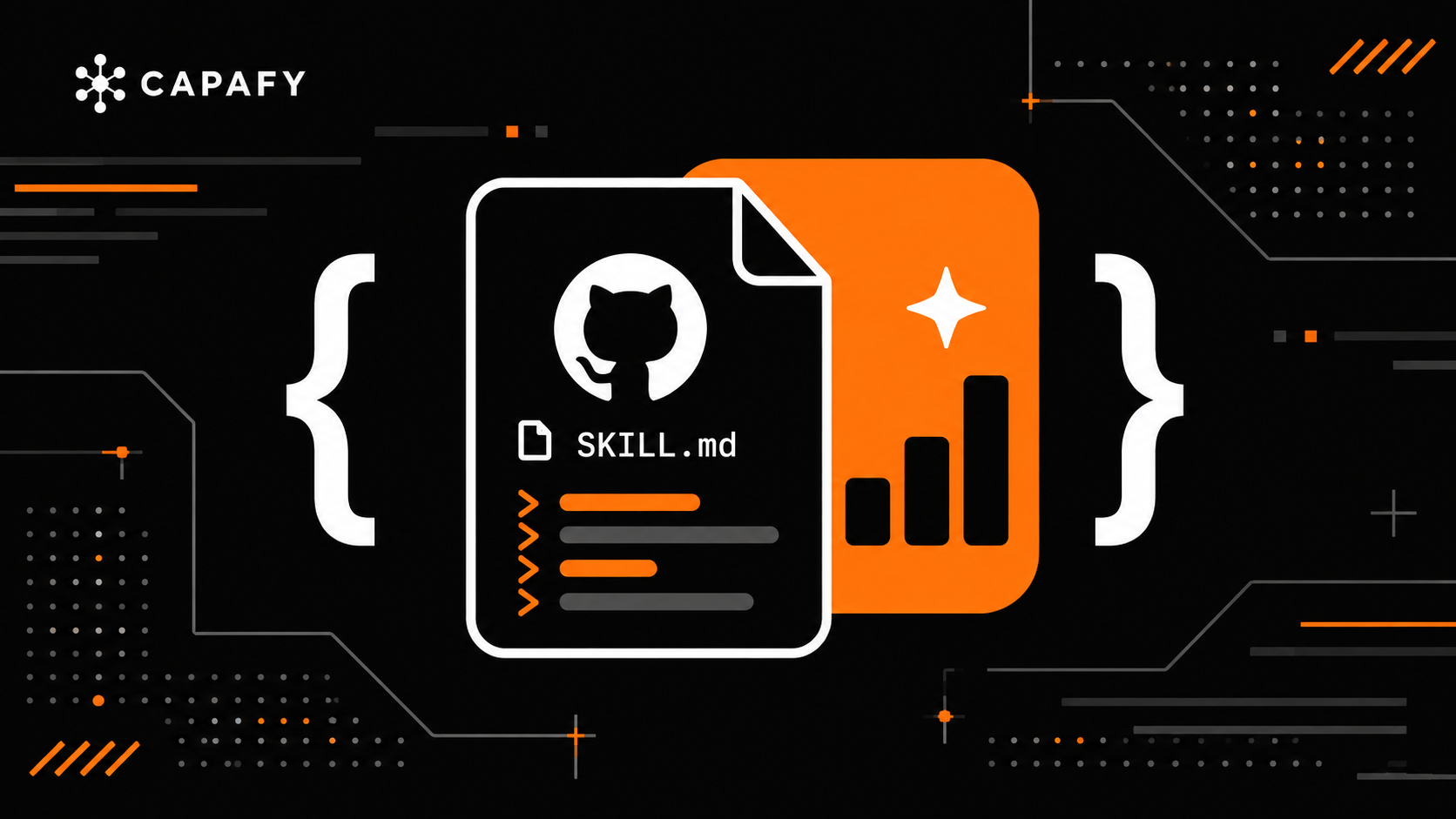
A Skill usually contains a SKILL.md file, along with any scripts, references, configurations, or assets needed to complete the work.
It may define:
- What information to collect
- Which steps to follow
- Which tools to use
- How to check the result
- What the final output should include
That makes a Skill different from a one-time prompt.
A prompt gives an AI an instruction. A Skill gives it a repeatable way of working.
For example, an SEO specialist could build a Skill that reviews a page, finds technical and content issues, prioritizes them, and produces a structured audit.
A recruiter could build one that compares candidates against a role and flags where evidence is missing.
A video creator could build one that turns a script into scenes, shots, visual direction, and a production plan.
The model provides general intelligence. The Skill provides the method.
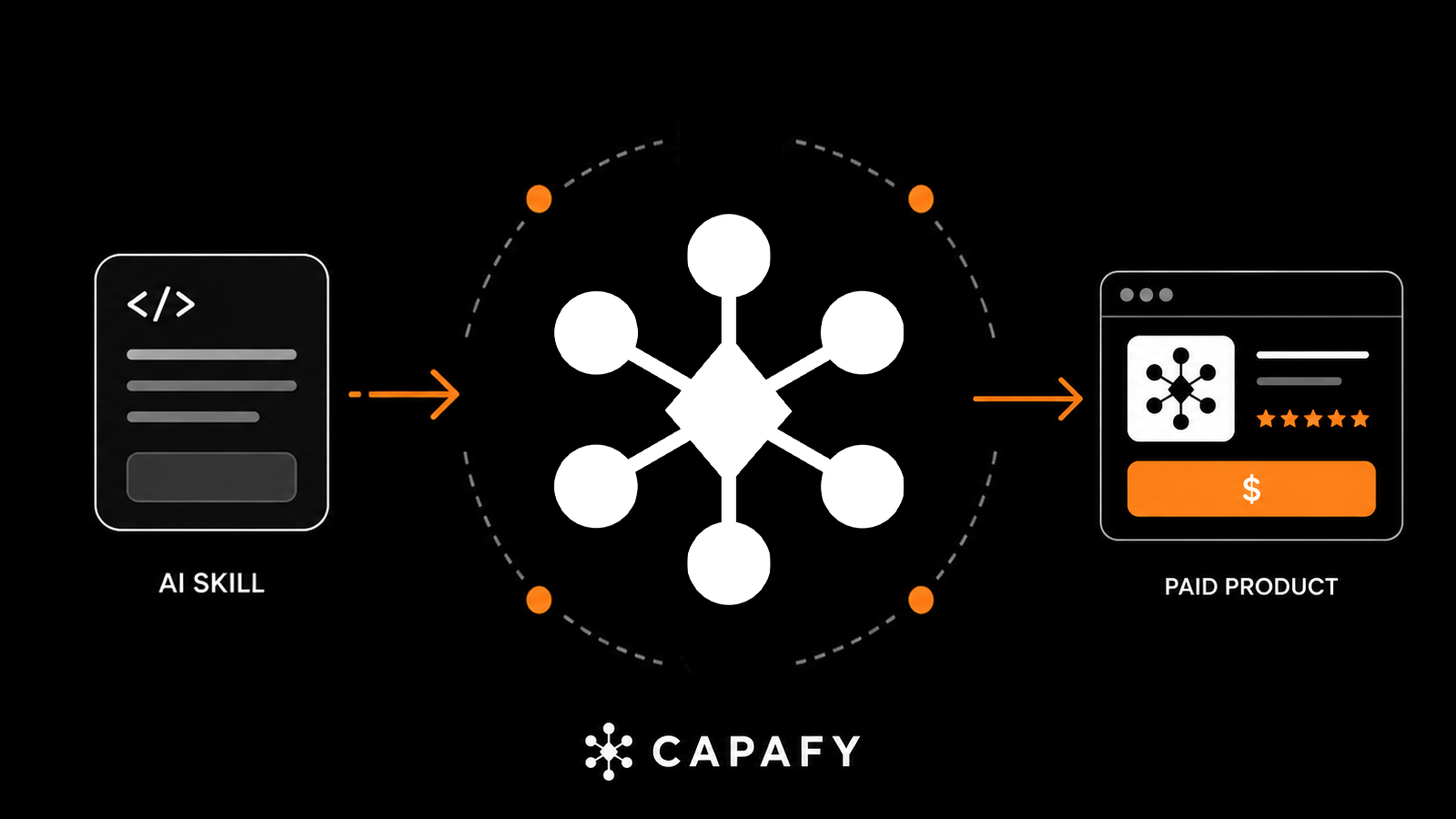
When a Skill is listed on Capafy, it becomes a Skill-based Agent. Across the marketplace, these products are usually called simply Agents.
Why AI Skills can become paid products
Many useful Skills never move beyond a local folder or private repository.
Others are released as free downloads. Open distribution can be the right choice when the goal is collaboration, education, or community adoption.
But it is not the right model for every creator.
A Skill may contain years of professional experience, a tested process, proprietary scripts, carefully refined prompts, or research that would be difficult to replace. Publishing the full package means anyone who downloads it may be able to inspect, copy, change, or fork the underlying method.
There are also practical problems beyond source protection.
A creator still needs to answer:
- Where will people discover the Skill?
- How will they understand what it does?
- How will payments work?
- Where will the Skill run?
- How will API credentials be protected?
- Can the creator earn from continued use?
Capafy gives a Skill the parts it needs to become a product.
Each published Agent has an Agent Card that explains what it does, who it is for, how it runs, what it costs, and what users can expect. The publisher chooses a pricing and delivery model. The user purchases access and receives the result.
This changes the value of the Skill.
It is no longer only a folder someone can download. It becomes a capability people can discover and use when they need a specific job done.
How Capafy works for users and publishers
Capafy is a two-sided marketplace. It is designed for the people who need specialized AI capabilities and the people who build them.
For users
Users usually start with a task.
They may need to analyze a document, review code, research a company, prepare a presentation, improve a landing page, create marketing assets, or complete another specialized workflow.
Instead of starting with a blank chat and trying to design the entire process through prompting, they can choose an Agent already built for that job.
An Agent Card shows:
- The task the Agent handles
- Who it is designed for
- The input it accepts
- The result it produces
- Its pricing and execution mode
- Examples, ratings, and publisher information
Users can browse and run Agents directly on Capafy Search. For Agents that run in Capafy’s cloud, no local installation is required.
People who already work inside Claude Code, Codex, or OpenClaw can also install the Capafy User Skill:
install https://api.capafy.ai/install-user-skill.mdOnce installed, their agent client can help find and use suitable Capafy Agents without requiring them to leave their existing workflow.
For publishers
A publisher does not have to be a traditional software company.
Publishers can be developers, marketers, researchers, analysts, designers, recruiters, ecommerce operators, consultants, or specialists in almost any field.
The main requirement is a useful and repeatable method.
If you know how to complete a task well, and that process can be expressed through instructions, references, scripts, examples, or decision rules, it may be suitable for a Skill.
Publishing follows a simple path:
- Package the workflow as a Skill.
- Create an Agent Card explaining its value.
- Choose how it should run and how users will pay.
- Submit it for review.
- Earn when users purchase or use it.
To start, install the Capafy Publisher Skill:
install https://api.capafy.ai/install-publisher-skill.mdThe Publisher Skill helps prepare the package and guide it through the publishing process. Capafy handles the infrastructure around the product, including hosting, payments, credential safety, and delivery.
How publishers earn on Capafy
Not every Skill should be sold in the same way.
A Skill used every day has a different value from one used for a single project. A proprietary cloud workflow also needs a different model from a package the buyer downloads and owns.
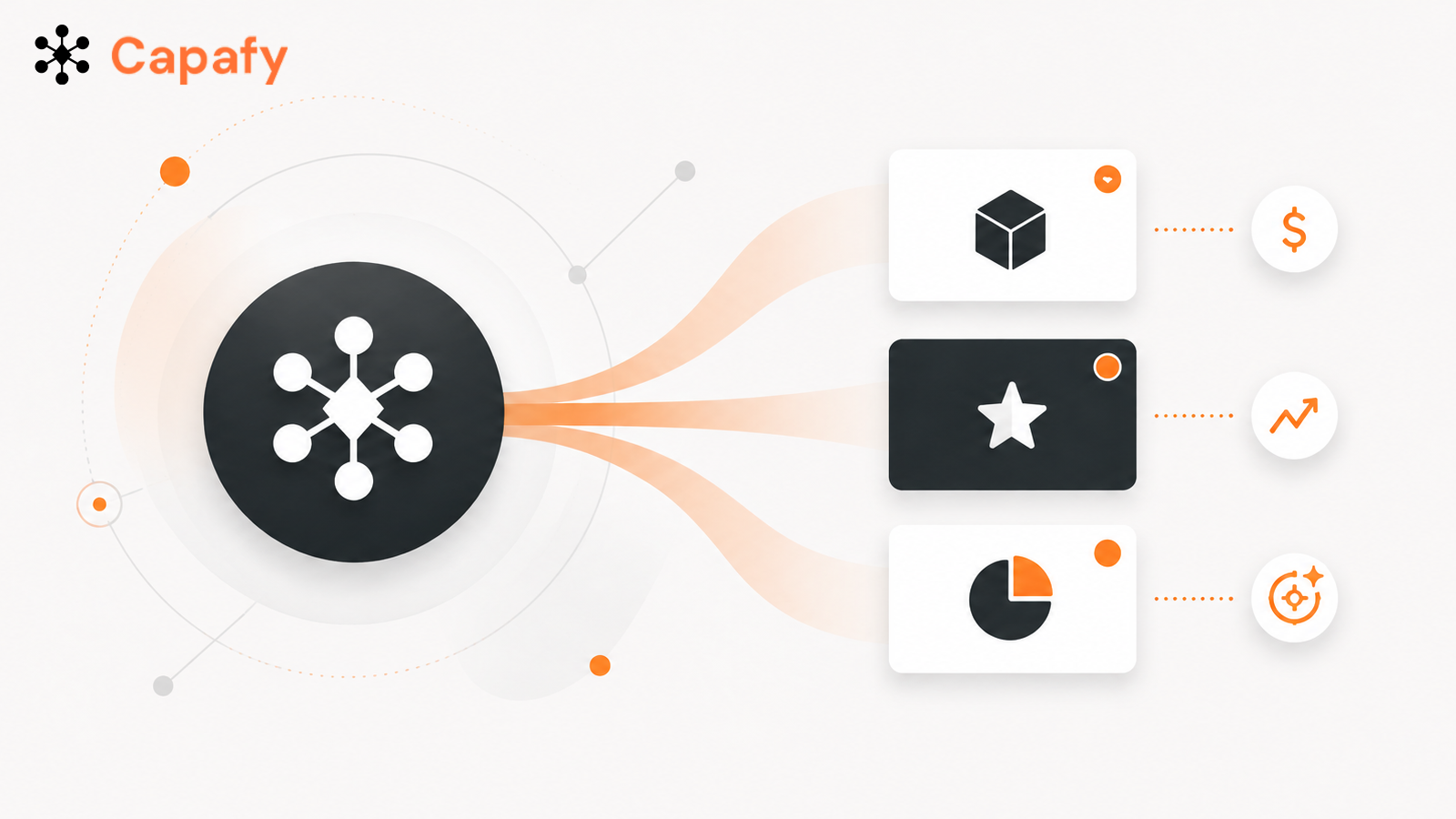
Capafy supports three main ways to earn.
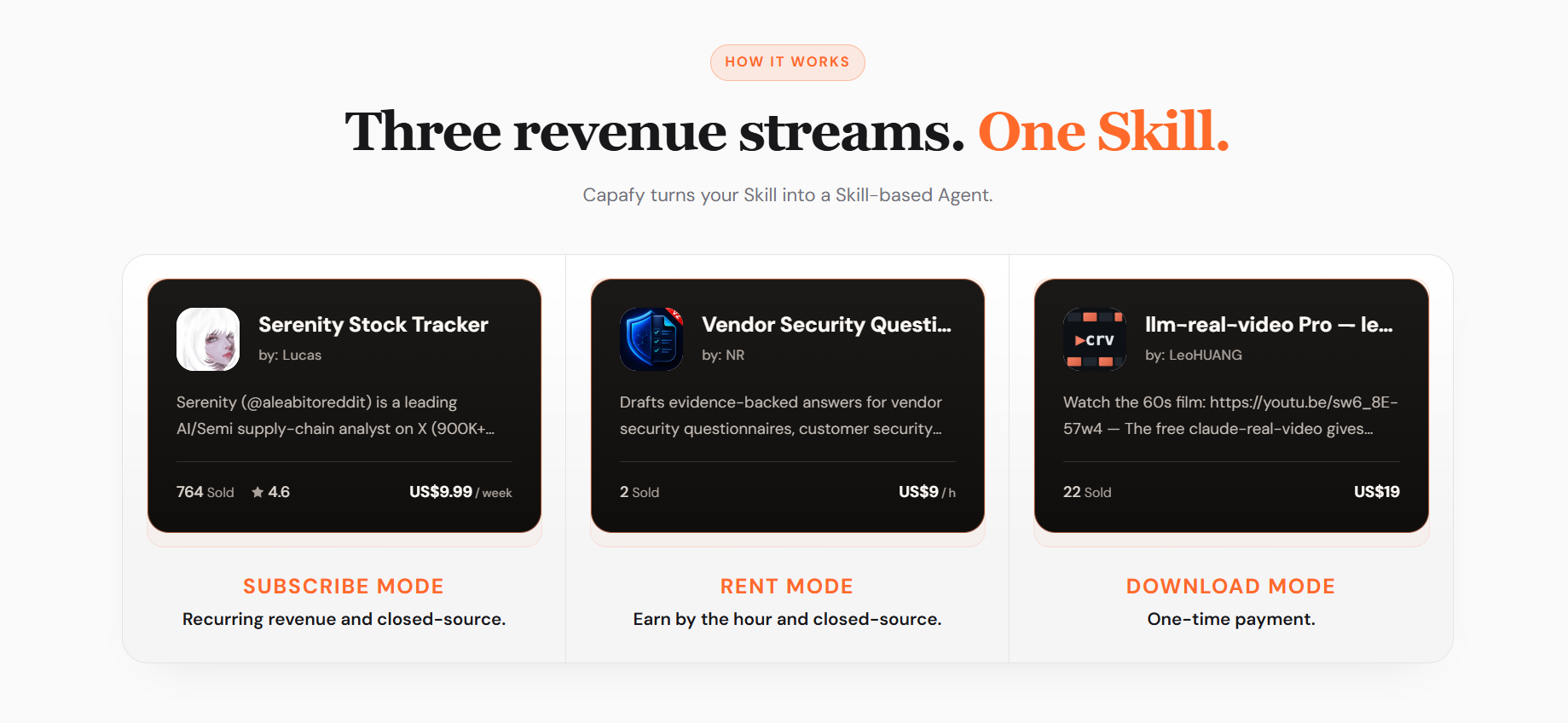
Subscription
A publisher can offer an Agent on a daily, weekly, monthly or yearly subscription.
This works well for Skills that provide ongoing value, such as monitoring, recurring research, regular content production, repeated analysis, or business operations.
The user keeps access during the subscription period, and the publisher earns from renewals.
Hourly access
Some Agents are better suited to focused, time-limited work.
A publisher can charge by the hour for tasks such as deep research, document analysis, security reviews, media processing, or one-off business projects.
The user purchases a block of time and works with the Agent during that period.
One-time purchase
A publisher can also sell the complete Skill package for a one-time price.
The buyer downloads the files and runs the Skill locally in a compatible agent client.
This model works well when the user needs local control, wants access to the files, or expects to inspect and modify the Skill on their own machine.
Downloadable Skills can also be offered for free.
Run on Capafy or Download?
One of the most important choices a publisher makes is whether to sell access to a capability or deliver the actual Skill files.
With Run on Capafy, the Skill runs in Capafy’s cloud environment.
The user interacts with the Agent and receives the result, but does not receive the Skill’s source files, prompts, scripts, or internal logic.
The user gets what the Skill does.
The publisher keeps how it works.
This is useful when the Skill contains valuable intellectual property. A publisher can let people use the workflow without giving away the complete method after the first purchase.
With Download, the buyer receives the Skill package and runs it locally. This is a better fit when users need full control, want to inspect the files, or expect to customize the workflow.
| Run on Capafy | Download | |
|---|---|---|
| Where it runs | Capafy’s cloud | The user’s devices |
| User receives source files | No | Yes |
| Publisher can keep logic private | Yes | No |
| Typical pricing | Subscription or hourly | One-time purchase |
| Local setup required | No | Yes |
| Best suited for | Proprietary workflows and managed services | Local control and file ownership |
Choose Run on Capafy when you want to keep your prompts, scripts, and internal logic private.
Choose Download when users need the full Skill files and want to run or modify them locally.
What can you publish?
The best Skills solve one clear problem and produce a useful result.
For example:
- Review code and suggest fixes
- Audit a landing page
- Create an ecommerce listing
- Analyze a spreadsheet
- Screen job candidates
- Turn a document into slides
- Research a company or market
- Create a video production plan
A Skill is usually ready to publish when it has:
- A clear task
- A repeatable process
- A useful output
- A specific target user
You do not need to build a new AI model or a large app. You can start with a workflow you already use in coding, marketing, research, design, recruiting, ecommerce, or another field.